
To view this on the COS website, click here co-document-library-case-for-series-part-5
To download the pdf file from the COS website, click here 5._Case_for_State_Convention_and_Colorado_Ratifying_Plan_(as_of_February_17%%__%%2025)_v1.5.pdf
CO Document Library-Case for Series Part 5
Attachment: 4673/5.CaseforStateConventionandColoradoRatifyingPlan(asofFebruary17__2025)v1.5.pdf
|

1
Case for State Convention Mode of
Ratification for Amendments to the U.S.
Constitution
A Colorado Ratifying Plan and other evidence to support a State Convention
Written by Mr. Michael D. Forbis
Version 1.5 (as of February 17, 2025)
Purpose. To socialize the idea of a state level ratifying convention following an Article V
“Convention for proposing Amendments.” A Colorado Ratifying Convention is the example
used within this document. This is a living document, and it can be updated and improved from
new lessons learned.
Disclaimer. The views expressed in this work are those of the author and do not necessarily
represent the views of Convention of States Action (COSA), its staff, or affiliates.

2
Executive Summary
In Article V of the U.S. Constitution, there are two modes of ratification for proposed
amendments, and they are by state legislatures and state level conventions. There are several
advantages for conducting a state level ratifying convention for proposed amendments to the
U.S. Constitution.
•
The state convention method can more directly involve grassroot citizens in the
amendment process, and it is a better reflection of the people’s will. The
Colorado
Ratifying Plan
explains the conceptual idea of the process.
•
A state convention method is twice as likely to be successful to ratify amendments as the
state legislature method.
1
•
Voters will likely trust a state convention more than the state legislature to examine
proposed amendments.
2
•
There is greater certainty the outcome of a state convention will remain unchanged than a
state legislature.
3
•
There is less bias with the state convention method because it has a greater chance of
involving direct “independent” voters.
4
The mode of ratification by state convention is a method to bypass a state legislature just
as an Article V “Convention for proposing Amendments” is a method to bypass Congress. They
both represent a constitutionally based approach for grassroot citizens to bypass their elected
leaders to address amendments to the U.S. Constitution, and they resemble the best opportunities
for grassroot citizens to become involved in self-government. When an Article V Convention
meets to propose amendments, it will be a historical opportunity and will likely have nationwide
attention drawn to it. To maintain the momentum of grassroots activism started through an
Article V Convention, it makes sense for it to continue through state level ratifying conventions.
The content of this case paper provides additional evidence and support for a state
convention as the better mode of ratification for amendments to the U.S. Constitution.
1
See Appendix A, page A-1 (mathematical model using Law of Total Probability)
2
See Appendix A, page A-2 (recent polling research from national and state organizations)
3
See Appendix A, pages A-3 to A-6 (historical record examination on both modes of ratification)
4
See Appendix B, pages B-1 to B-4 (statistical hypothesis test)
3
Colorado Ratifying Plan
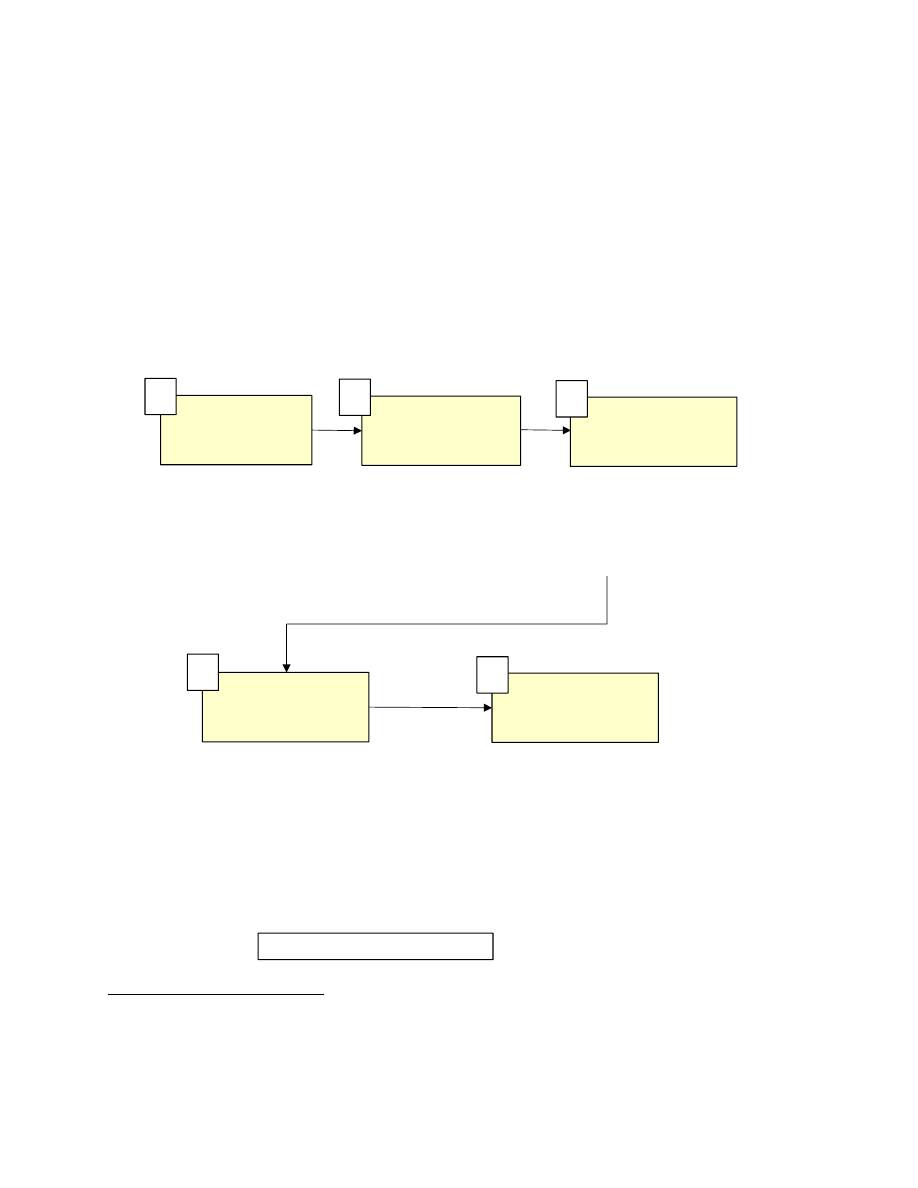
Prior to ratification, amendments must first be proposed. An Article V Convention is an
alternative approach to proposing amendments to the U.S. Constitution rather than the U.S.
Congress. Even though there is no specific historical precedent of an Article V Convention,
there is general historical precedent for conventions such as the 1787 Philadelphia Convention.
For the purposes of this “Colorado Ratifying Plan,” the assumption is an Article V Convention
successfully proposed written amendments. In addition, there is the assumption of a reasonable
timeframe for ratification, and the mode of ratification is by state level convention.
5
Based on
these assumptions, the preparation and execution of a Colorado Ratifying Convention can follow
the general process depicted in Figure 1.
5
Appendix C (Historical Ratification of Amendments) explains some historical background and track record of the 33 proposed
amendments to the U.S. Constitution. It provides specific case examples of 10 proposed amendments with the timeframe of
ratification set by Congress of seven years, and it provides sample languages to include within the
amendment text
involving
timeframe of ratification and mode of ratification. This historical examination into the ratification of U.S. Constitution
Amendments is critical background for consideration in an Article V Convention and Colorado Ratifying Convention.
Article V
Convention
•
5-8 Proposed
Amendments
•
Timeframe for
Ratification: 7 years
•
Mode of Ratification:
State Convention
(recommendation)
Colorado
Statute Passed
•
Set dates and location
for convention
•
Establish election
procedure for
convention delegates
U.S. Congress
Review
•
Review proposed
amendments;
ensure consistency
with commission
•
Send to state
conventions for
ratification
Statewide
Election
•
100s of eligible citizens
register in each Colorado
Senate District (SD)
•
Five citizens from each SD
randomly chosen
•
Voters select 1 of 5 citizens
on ballot to become delegate
•
Total of 35 delegates voted to
convention
State
Convention
•
~Two Weeks in Duration
•
Follow Mason’s Manual of
Legislative Procedures
•
Elect Convention Leadership
•
Examine 5-8 Proposed
Amendments
•
18 of 35 Delegates needed to
ratify a single amendment
•
Vote on each amendment
separately
1
2
3
4
5
Figure 1: Colorado Ratification Process

4
In this particular scenario, the Article V Convention is likely to propose between 5-8
amendments to the U.S. Constitution, and this range is a reasonable planning assumption. The
proposed amendments are within the parameters of Article V Convention’s 3-part platform.
•
Impose fiscal restraints on the federal government
•
Limit the power and jurisdiction of the federal government
•
Limit the terms of office for federal officials and for members of Congress
In addition, the Article V Convention is successful in establishing a mode of ratification by state
level convention with a timeframe for ratification of seven years.
6
Upon receipt of the proposed
amendments, the U.S. Congress conducts a review to ensure the proposed amendments are not
outside the parameters of the Article V Convention’s 3-part platform. For example, the proposed
amendments cannot address anything related to individual liberties and rights, and this subject
area is clearly outside the main scale and scope of the convention to “limit the power of the
federal government.” Once reviewed, the U.S. Congress determines the mode of ratification by
state convention (assumed as a recommendation by Article V Convention) and sends the
proposed amendments to the states for ratification.
Unlike an Article V Convention, there is specific historical precedent for state level
ratifying conventions, and the 21
st
Amendment is the only one to be ratified by state level
conventions. The 21
st
Amendment was the repeal of the 18
th
Amendment, and it delegated to the
states to determine any limitations / prohibition of alcohol. In the 1932 general election, there
was a national mood from both Republicans and Democrats to repeal the 18
th
Amendment. Most
importantly, both parties agreed that Congress should adapt an amendment to repeal the 18
th
Amendment, and it should be sent to the states for ratification by state level conventions.
7
The
overall result of state level conventions was that they
“truly registered the will of the American
people on a great national issue.”
8
Similarly, state level conventions will also capture the true
will of the American people on the current day national issue to “limit the power of the federal
government.” When an Article V Convention meets, it is very likely to be on the national scene
as a unique historical event, and state level ratifying conventions are very appropriate to close
out this overall historical movement.
Once Colorado receives the proposed amendments, it needs to pass a statute for the state
ratifying convention time and location, and the statute will explain the election process for
delegates to the convention.
9
In 1933, Colorado passed a statute to form a state level convention
6
See Appendix C. With the exception of the 27
th
Amendment, all amendments to the U.S. Constitution were ratified well under
7 years, and this is a reasonable timeframe (i.e., includes group of 10 amendments - Bill of Rights). There are two historical
examples of proposed amendments that did not ratify within seven years (Equal Rights Amendment (1972) and DC Voting
Rights Amendment (1978). There is enough historical precedent of ratification success within seven years versus not.
7
Ratification of the Twenty-First Amendment to the Constitution of the United States: State Convention Records and Laws
,
Compiled by Edward Somerville, 1939, pages 3-4 (Introduction).
8
Ratification of Twenty-First Amendment
, page 8.
9
Note. The qualifications for state delegates can reference the published qualifications for commissioners sent from Colorado to
the original Article V Convention. Thus, it can be an easy copy and paste from already approved qualifications.

5
for the 21
st
Amendment. In the statute, the governor nominated 30 candidates who were regular
citizens of the state, and there was a statewide election for Colorado voters to select 15 of them
as official delegates to the state convention. In addition, the statute determined the location of
the convention was in the Colorado Senate Chamber, and it was scheduled September 26, 1933.
Finally, the statute provided general instructions for how citizens would use a ballot vote.
10
For
the Article V Convention proposed amendments, Colorado can pass a statute like the 21
st
Amendment with some differences. The statute should designate the Colorado Senate Chamber
as the location of the state convention, and it should explain that
Mason’s Manual for Legislative
Procedure
will serve as the governing rules for the convention.
11
In addition, the statute should
explain how one delegate will come from each of the 35 Senate Districts in the state in order to
provide a fair representation from across Colorado, and the basis for using 35 Senate Districts to
determine delegates originates from the Colorado Constitution.
12
As compared to the 21
st
Amendment, 35 delegates are significantly greater than 15 delegates, and the statute should not
allow a role for the governor in the delegate election process because the governor does not have
a role in the state application for the original Article V Convention. It is critical to remember
that Article V of the U.S. Constitution does not allow for an “executive branch” role in the
amendment process by either the President of the United States or State Governors.
For the actual statewide election as described in the statute, Colorado citizens can
volunteer to be a delegate and must file to be a delegate within their respective Senate District. It
is likely that hundreds of citizen volunteers will file to be a delegate within each Senate District,
and there will be a deadline to file. After filing, a random selection of five individuals from the
hundreds who filed will take place for each Senate District, and these five individuals will be
candidates for their respective Senate District as a delegate in a statewide election. Each
candidate will not necessarily need to campaign to become a delegate, but they will submit a
short summary of their qualifications and desire to be a delegate to the state level ratifying
convention. Afterwards, voters in each Senate District can review the five candidates, and voters
will eventually choose one of the five candidates to be a delegate during the statewide election.
As a result, there will be 35 total delegates elected to the state ratifying convention. Through this
election process, there are three components involving volunteering, random selection, and
choice, and all three components combined provide a fair and balanced approach for determining
delegates. It helps to reduce “bias,” and it helps to ensure greater chances for “independent”
voters to be included within the state ratifying convention instead of typical Democrat and
10
Ratification of Twenty-First Amendment
, pages 535-538.
11
Colorado Legislative Rules
, Legislative Council Publication 816, Updated November 2024, Senate Rule 40 (Parliamentary
Authority). Explains the latest edition of
Mason Manual of Legislative Procedure
shall govern the Senate in all cases in which it
is not inconsistent with the rest of the Colorado Legislative Rules.
12
Section 1, Article XIX (Amendments) of the Colorado Constitution published in 1876 discusses how to call a Colorado
Convention for amending the Colorado Constitution. It explains how delegates will be elected from each of the Senate Districts
established in Colorado. It is practical to apply this general rule from the Colorado Constitution to elect delegates from each of
the 35 Colorado Senate Districts for a Colorado Ratifying Convention for proposed amendments to the U.S. Constitution.

6
Republican minded individuals.
13
Finally, Colorado has historically conducted statewide voting
to determine the final version of amendments added to the Colorado Constitution whether they
originated from ballot initiatives or legislative referrals. In either case, the final approval for any
Colorado Constitutional Amendment was determined by the people of Colorado. Thus, this
election process for determining delegates for the Colorado Ratifying Convention for U.S.
Constitutional Amendments ensures a level of consistency with the Colorado historical practice
of gaining the people’s approval.
14
After the election process, the 35 delegates will meet in the Colorado State Senate
Chamber for the Colorado Ratifying Convention. During the Colorado state convention for the
21
st
Amendment, the 15 delegates elected a President of the Convention and other convention
officials such as a committee chair. In addition, the convention delegates took their oath of
office, established convention procedures, and a voting rule (8 of 15 delegates) for ratification.
There was debate on the 21
st
Amendment and its impact on Colorado. At the conclusion of the
convention, there was a full vote of 15-0 to ratify the amendment. Overall, the convention was
90 minutes in length, and Colorado became the 24
th
state to ratify the 21
st
Amendment on
September 26, 1933.
15
In all the state ratifying conventions in the United States, the entire length
of time did not exceed a day, and New Hampshire posted the shortest recorded convention of 17
minutes long.
16
In addition, the state conventions to ratify the base U.S. Constitution from 1787-
1788 ranged from 4-38 days in length.
17
For the 5-8 proposed amendments from the Article V
Convention, a Colorado Ratifying Convention will need approximately two weeks. It will
already have established rules to follow from
Mason’s Manual of Legislative Procedure
, and the
first couple of days of the convention can be used to review the rules, elect convention officials,
and establish any appropriate committees (e.g., three committees aligned to 3-part platform of
the Article V Convention). The actual reading of the 5-8 proposed amendments will be straight
forward because they should be short (<350 words each), and delegates can only vote to ratify
the amendment as written or not. There are no edits permitted to adjust the language of the
proposed amendments. Thus, it is very likely the vast majority of time spent by delegates is
discussing, understanding, and debating any merits to each amendment. In many ways, the
Colorado Ratifying Convention will be less complex than the Article V Convention to propose
amendments. It is possible for committees to spend 2-3 days discussing their respective assigned
amendments to examine, and then the main convention plenary of all 35 delegates could spend
an entire 2
nd
week to debate any of the merits of the proposed amendments. At the end, the 35
delegates cast individual votes (18 of 35 voting rule) for each amendment independently, and the
13
Appendix B (Statistical Hypothesis Test in Support of State Convention) provides statistical evidence for how “independent”
voters are significantly less “bias” than Democrat and Republican voters.
14
The Colorado Constitution has been amended 166 times as of 2023, and all these were finally approved by a statewide vote
from Colorado citizens. Thus, the practice for gaining the people’s approval for changes to the Colorado Constitution is a strong
historical precedent, and this should continue for ratifying proposed amendments to the U.S. Constitution.
15
Ratification of Twenty-First Amendment
, pages 33-42. Note: Utah became the 36
th
state to ratify the 21
st
Amendment on
December 5, 1933 for it to become effective.
16
Ratification of Twenty-First Amendment
, page 7.
17
Appendix A summarizes the state conventions that ratified the base U.S. Constitution from 1787-1788.

7
convention concludes with all amendments ratified or some of them ratified. Essentially, the
Colorado Ratifying Convention serves much like a legislative body, but it is not as complicated
to conduct as either the Colorado House of Representatives or Senate. Its sole purpose is to read,
debate, and vote on a series of 5-8 proposed amendments that amount to probably no more than
3-pages total of complete written text, and they should be simple and straight forward to
understand. Since no editing is allowed, the Colorado Ratifying Convention will have an easier
time with implementing it legislative procedures and rules to follow. Most importantly, typical
Colorado citizens can be successful delegates to the Colorado Ratifying Convention with little to
no experience in legislative affairs.
This “Colorado Ratifying Plan” is intended to be a conceptual plan to help lay the
foundation for a more detailed plan for a Colorado Ratifying Convention, and it is intended to
socialize the general idea of a state convention.
The background and historical references offer
additional information for the detailed plan development as well. A Colorado Ratifying
Convention is better to examine the proposed amendments than the Colorado State Legislature
because it will not be distracted by other legislative priorities. In addition, it will be less
bias
than the Colorado State Legislature because it will have direct “independent” voters present
without being entirely occupied by Democrats and Republicans. Finally, and most importantly, a
Colorado Ratifying Convention will truly be a reflection of Colorado citizens and their will for
the state.
Supporting Appendices (other evidence to support a state convention)
•
Appendix A: Mode of Ratification – State Legislature vs. State Convention (A-1 to A-6)
•
Appendix B: Statistical Hypothesis Test in Support of State Convention (B-1 to B-4)
•
Appendix C: Historical Ratification of Amendments (C-1 to C-6)

Appendix A: Mode of Ratification – State Legislature vs. State Convention
A-1
The two different modes of ratification within
Article V of the U.S. Constitution can be compared
using the Law of Total Probability. The law basically
states that mutually exclusive events within the same
universal set equal to a total probability of one (1.0). In
the case of Figure 2, the binary probabilities (Pr) of
success and failure of a single event have a total sum
probability of 1.0, and it can be represented in the
following equation: Pr(S) + Pr(F) = 1.0
Article V states that “three fourths of the several States” (38 of 50) must ratify an
amendment for it to become effective. Another way to view this Article V requirement is that it
takes 13 of 50 states to vote against an amendment for it not to become effective, and this inverse
rule applies differently to the two different modes of ratification.
For the state legislature mode of ratification, there are 99 General Assembly state
chambers (or 99 unique legislative bodies) that may examine a proposed amendment. Nebraska
is the only state with one chamber (Senate), and the other 49 states have two chambers (House
and Senate). In those states with two chambers, both are required to pass a proposed amendment
in order for the whole one state vote to ratify the proposed amendment. On the other hand, it
only takes a single chamber to vote against a proposed amendment for the whole one state vote
to be against the amendment. Essentially, it takes 13 of 99 state chambers to vote against a
proposed amendment for it not to become effective at all. The overall probability of success
using the state legislature mode of ratification is represented by the following equations below.
•
Calculate Failure Rate: (99-13)/99 = 86/99 = 0.869 = Pr(F)
•
Probability of Success: Pr(S) = 1-Pr(F) = 1-0.869 = 0.131 or
13.1%
For the convention mode of ratification, there are 50 single state conventions (or 50
unique legislative bodies) that may examine a proposed amendment. The result of each
convention counts as the whole one state vote to ratify or not ratify the proposed amendment. It
takes 38 of 50 state conventions to ratify a proposed amendment for it to become effective. On
the other hand, it takes 13 of 50 state conventions to vote against a proposed amendment for it
not to become effective at all. The overall probability of success using the convention mode of
ratification is represented by the following equations below.
•
Calculate Failure Rate: (50-13)/50 = 37/50 = 0.74 = Pr(F)
•
Probability of Success: Pr(S) = 1-Pr(F) = 1-0.74 = 0.26 or
26%
Therefore, the convention method is twice as likely to be successful to ratify amendments
as the state legislature method.
This basic mathematical model using the Law of Total
Probability makes a simple case for why the convention method should be the preferred mode of
ratification, and it assumes full participation by all states in the ratification process (i.e., no state
is “dormant” from participating).
Success (S)
Failure (F)
Figure 2: Basic Venn Diagram for Mutually Exclusive Outcomes

Appendix A: Mode of Ratification – State Legislature vs. State Convention
A-2
In a nation-wide poll conducted by Susquehanna Polling and Research (SB&R) in August
2024, the following question was asked: “Who do you trust more – the state legislators who live
and work closer to your home, or Members of Congress who live and work in Washington,
D.C.?” The response was 59% state legislators and 8% Members of Congress.
1
However, this
survey compares two entities within the same compound question, and the better comparison is
through two independent questions as shown Figure 3 (two pie charts). In reality, the level of
trust in the federal government is about 20-25% over the last 15 years,
2
and it is the same level of
trust for Colorado. In
Colorado, the level of trust in
the state government is 37%,
and this likely applies to the
state legislature.
3
The trend
is that voters trust people
closer to home, and a state
convention represents people
closer to home.
Thus, voters
will likely trust a state
convention more than the
state legislature to examine
proposed amendments
.
1
https://conventionofstates.com/national-polling-shows-massive-support-for-limiting-federal-power-and-an-article-v-convention
2
Pew Research Center:
https://www.pewresearch.org/politics/2024/06/24/public-trust-in-government-1958-2024/
3
Colorado Polling Institute (CPI), Survey of Likely Voters, November 28, 2023 (slide 23)
https:%%//%%static1.squarespace.com/static/645aadf3ccf9412509fbc4a7/t/65781eb1e7162d4ef9e53a26/1702371000883/21136+CPI-\\ CO-Deck_v2-CO-issues.pdf
0%
10%
20%
30%
40%
50%
60%
70%
80%
90%
19
58
19
66
19
70
19
74
19
77
19
79
19
82
19
85
19
87
19
89
19
91
19
93
19
95
19
97
19
98
20
00
20
02
20
04
20
06
20
08
20
10
20
12
20
14
20
17
20
20
20
22
20
24
National Survey Question: Do you trust the federal government to do
what is right?
(% Responses: Just about always or most of the time)
(Pew Research Center)
20-25% Level of Trust
After 9/11 Attacks
Trust a lot
7%
Trust a little
18%
Neither trust
nor distrust
13%
Unsure
1%
Distrust a little
19%
Distrust a lot
42%
Survey Question for Colorado: How much do you trust or
distrust the
Federal Government
to do the right thing?
(Colorado Polling Institute (CPI), November 2023)
25% Level of Trust
Figure 3: Polling Summaries
Trust a lot
12%
Trust a little
25%
Neither trust
nor distrust
16%
Unsure
2%
Distrust a little
19%
Distrust a lot
26%
Survey Question for Colorado: How much do you trust or
distrust the
Colorado State Government
to do the right thing?
(Colorado Polling Institute (CPI), November 2023)
37% Level of Trust

Appendix A: Mode of Ratification – State Legislature vs. State Convention
A-3
According to historical record, the state legislature was the mode of ratification for 26 of
27 amendments to the U.S. Constitution, and the state convention was the mode of ratification
for the base Constitution (1787-1788) and 21
st
Amendment (1933). In general, both have
demonstrated to be successful modes of ratification. However, there are some historical cases
where states changed their original decision, and it caused uncertainty in the overall amendment
process.
From 1866-1867, New Jersey and Ohio were some of the early states to ratify the 14
th
Amendment, yet they later rescinded their decision. In addition, North Carolina, South Carolina,
and Georgia initially rejected the 14
th
Amendment, yet they later ratified the 14
th
Amendment
under their new reconstructed state legislatures (i.e., based on Reconstruction Act). Secretary of
State William Seward informed Congress of the situation explaining the inclusion of these 5
states makes up 28 of 37 required to ratify the 14
th
Amendment. The U.S. Congress declared the
14
th
Amendment was ratified by a Joint Resolution passed in July 1868.
4
Thus, Congress set the
historical precedent to recognize only the first ratification decision by New Jersey and Ohio but
not the rescissions. On the other hand, Congress also recognized the changed decisions to ratify
the 14
th
Amendment by North Carolina, South Carolina, and Georgia. This historical example of
the 14
th
Amendment is the only one to have a successful overall ratification that depended on
states that initially rejected it but later ratified it. There are other amendments where states
initially rejected it but later ratified it. However, the changes came after final passage was
complete, or there were more than enough states to ratify it without the changes. In other words,
the states who changed from an initial rejection to ratification did not make a difference in the
final passage of the amendment. In another instance, New York ratified the 15
th
Amendment and
later rejected it, yet the U.S. Congress declared the ratification of the 15
th
Amendment counting
New York’s first decision of ratification and not the rescission.
5
In these examples, the state
legislature was the mode of ratification, and there was no time limit for these amendments.
When it comes to the rescissions of previous ratifications by state legislatures, Article V of the
Constitution only addresses states’ power to ratify an amendment and not rescissions.
6
These
case examples of the 14
th
and 15
th
Amendments support this precedent by Congress.
In a century later, the precedent to not recognize rescissions by the state legislatures
would come into question during the ratification process of the Equal Rights Amendment (ERA)
proposed by Congress in 1972. The ERA had a time limit of seven years, and 35 states initially
ratified the amendment when 38 were required. Five of the original states (Kentucky, Nebraska,
Tennessee, Idaho, and South Dakota) later rescinded their original ratifications within the seven
year timeframe, and Congress did not recognize these rescissions when it extended the time limit
for another three years. In the case
Idaho v. Freeman
(1982), the federal district court concluded
the state rescissions should be recognized, and it stated Congress could not change the deadline
once established in 1972. In an appeal to the Supreme Court, the federal district court was
instructed to dismiss the case as moot because the 2
nd
deadline set by Congress had expired with
4
https://crsreports.congress.gov/
Congressional Research Service (CRS) Report R42979,
The Proposed Equal Rights
Amendment: Contemporary Ratification Issues
, December 23, 2019, p.21
5
https://crsreports.congress.gov/
Congressional Research Service (CRS) Report R42979,
The Proposed Equal Rights
Amendment: Contemporary Ratification Issues
, December 23, 2019, p.21
6
https://www.equalrightsamendment.org/pathstoratification

Appendix A: Mode of Ratification – State Legislature vs. State Convention
A-4
no additional states who ratified the amendment.
7
So, the rescissions of these five states were
initially recognized as valid by the federal district court, and it could come into question again
with future proposed amendments to the U.S. Constitution with a mode of ratification by state
legislatures.
When it comes to the powers of state legislatures under Article V of the U.S.
Constitution, there are numerous historical examples where state legislatures passed an
“Application” to call a “Convention for proposing Amendments,” and some state legislatures
later rescinded their application.
8
In these circumstances under Article V, the U.S. Congress
recognized the state legislatures rescissions in every case, but Article V of the Constitution only
addresses states’ power to make an “Application” for a convention and not rescissions. In other
words, Congress recognizes one form of rescission under Article V but not the other form.
Unfortunately, there is a potential inconsistency by Congress with regards to state legislatures
changing an original decision under Article V. Therefore, state legislatures should examine their
original decision on an amendment very carefully and make it final, and this approach avoids the
uncertainty on the overall outcome of an amendment that may result from state legislatures
changing their original decision.
In the U.S. Constitution, Article VII says “The Ratification of the Conventions of nine
States, shall be sufficient for the Establishment of this Constitution between the States so
ratifying the Same.” Essentially, Article VII stated the mode of ratification of the base
Constitution was by state convention, and it only addresses states’ power to ratify and not rescind
(similar to Article V). The table below summarizes the historical record of state conventions,
and the length of time ranged 4-38 days (excluding Rhode Island).
9
By the time George
Washington was sworn in as the First President of the United States, there were 11 states that
ratified the Constitution with the exception of North Carolina and Rhode Island.
States
Timeframe for State Convention
Vote Count (# delegates)
Delaware
December 4-7, 1787 (4 days)
30-0 (30)
Pennsylvania
November 20 – December 12, 1787 (23 days)
46-23 (69)
New Jersey
December 11-18, 1787 (8 days)
38-0 (38)
Georgia
December 25, 1787 to January 2, 1788 (9 days) 26-0 (26)
Connecticut
January 3-9, 1788 (7 days)
128-40 (168)
Massachusetts
January 9 to February 7, 1788 (30 days)
187-168 (355)
Maryland
April 21-28, 1788 (8 days)
63-11 (74)
South Carolina
May 12-23, 1788 (12 days)
149-73 (222)
New Hampshire
June 18-21, 1788 (4 days)
57-47 (104)
Virginia
June 2-27, 1788 (26 days)
89-79 (168)
7
https://crsreports.congress.gov/
Congressional Research Service (CRS) Report R47619, The Equal Rights Amendment:
Background and Recent Legal Developments, July 11, 2023, p.8
8
Note. In Colorado, the state legislature passed Senate Joint Memorial 1 in 1978 to call an Article V Convention to develop a
Balanced Budget Amendment (BBA). In 2021, the Colorado state legislature rescinded all Article V Convention applications by
House Joint Resolution (HJR) 21-1006. Thus, the 1978 resolution was no longer valid. As of January 2025, HJR 21-1006 was
not posted by the Office of the Clerk of the House of Representatives (
https://clerk.house.gov/SelectedMemorial
). In addition,
this website list various “Application” rescissions that are officially recognized by the U.S. Congress.
9
Note.
The Debates in the Several State Conventions on the Adoption of the Federal Constitution,
Jonathan Elliot, 1876.
https://constitutioncenter.org/education/classroom-resource-library/classroom/4.5-info-brief-ratification-timeline/

Appendix A: Mode of Ratification – State Legislature vs. State Convention
A-5
North York
June 17 to July 26, 1788 (38 days)
30-27 (57)
North Carolina
10
1
st
: July 21 to August 4, 1788 (15 days), the
delegates voted to “neither reject nor ratify”
2
nd
: November 16-21, 1789 (6 days)
1
st
: 184-84 (268,
indecision)
2
nd
: 195-77 (272)
Rhode Island
11
1
st
: March 1790 (adjourned without voting)
2
nd
: May 29, 1790 (1 day, continuation)
1
st
: No vote
2
nd
: 34-32 (66)
On March 1, 1788, the Rhode Island State Assembly passed the “Rhode Island Act
Calling a Referendum on the Constitution,” and it was an approval of the new ratification
methodology in Article VII of the U.S. Constitution.
12
“In effect, the Rhode Island legislature
made every voter a delegate to a dispersed ratification convention and handed them the authority
to determine whether the Constitution should be adopted or rejected. As predicted, the Rhode
Island voters overwhelmingly rejected the Constitution by a vote of 238 to 2,714. But the
rejection by the people of Rhode Island was procedurally no different from the rejection by
North Carolina’s delegates in its 1788 convention.”
13
In a way, this so called “dispersed
ratification convention” held by Rhode Island acted as its 1
st
state ratifying convention in 1788,
and then there were two more state conventions held in 1790 (March and May). Despite the
multiple conventions held by North Carolina and Rhode Island, the mode of ratification by state
level conventions proved very successful, and it represented the “true will of the people.”
In 1933, the mode of ratification by state level conventions was implemented for the 21
st
Amendment (i.e., repeal of prohibition under 18
th
Amendment) to the U.S. Constitution.
Congress wrote a time limit of seven years within the
amendment text
, and there was serious
doubt state level ratifying conventions would occur within the timeframe. There were 48 states
in the nation, and 43 passed statutes establishing a state level convention to consider the 21
st
Amendment. There were 39 state level conventions actually conducted, and 38 of them ratified
the 21
st
Amendment (36 of 48 states required). South Carolina was the only state to reject it, and
there were no rescissions made by any state.
14
The entire ratification process took 10 months to
complete, and all state level ratifying conventions occurred within the “space of a single day.”
15
The overall success of the state ratifying conventions was also characterized as capturing the
“true will of the people.”
As a mode of ratification, there is a greater probability the results of a state convention
will remain unchanged as compared the state legislature because it is extremely difficult to
10
https://northcarolinahistory.org/commentary/north-carolinas-ratification-debates-guaranteed-bill-of-rights/
11
National Archives:
https://prologue.blogs.archives.gov/2015/05/18/rogue-island-the-last-state-to-ratify-the-constitution/
12
Note. Rhode Island was the only state not to send delegates to the 1787 Philadelphia Convention, but it joined all states in
approving the new ratification methodology (i.e., 9 of 13 state ratifying conventions) explained in Article VII of the U.S.
Constitution. In the Articles of Confederation, Article XIII explains how any “alteration” must be “agreed to, in a Congress of
the United States, and be afterwards confirmed by the legislatures of every State.” So, the new ratification methodology replaced
this statement in the Articles of Confederation after all 13 State Assemblies agreed to it.
https:%%//%%journals.law.harvard.edu/jlpp/wp-
content/uploads/sites/90/2017/03/Farris_FINAL.pdf/
Defying Conventional Wisdom: The Constitution Was Not the Product of a
Runaway Convention
, Michael Farris, March 2017, p114-116.
13
Defying Conventional Wisdom
, Michael Farris, March 2017, p117.
14
Ratification of the Twenty-First Amendment to the Constitution of the United States: State Convention Records and Laws
,
Compiled by Edward Somerville, 1939, page 5.
15
Ratification of the Twenty-First Amendment
, page 7.

Appendix A: Mode of Ratification – State Legislature vs. State Convention
A-6
conduct a second state convention especially if a state level statute is required to host it again.
For the state legislature, it is easier to seek a change to an original decision by just waiting until
the next state legislative session (assuming it is still within the time limit). In addition, there is
scholarly discussion that explains that a state convention can only be held once (i.e., “one and
done”). If this circumstance is true, it makes the results of a state convention absolutely final
with no opportunity for a later change. Thus,
there is
greater certainty the outcome of a state
convention will remain unchanged than a state legislature
, and it ensures the original ratification
(or rejection) of an amendment is more carefully considered before it becomes final.
Appendix B: Statistical Hypothesis Test in Support of State Convention
B-1
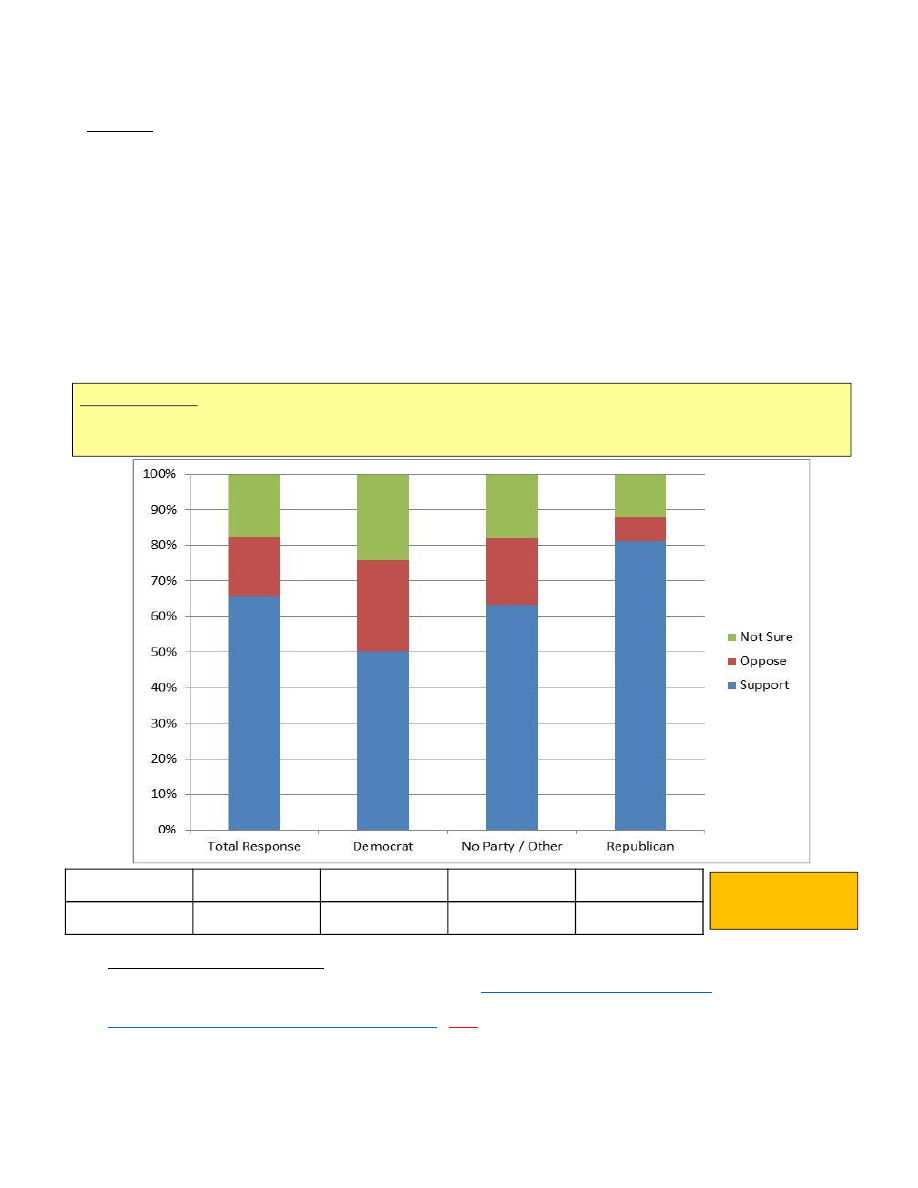
Situation. There are two approaches to proposing amendments as described in Article V of the U.S.
Constitution. The first approach involves Congress proposing amendments by 2/3’s super majority vote
in both chambers. The second approach involves 2/3’s of state legislatures (or 34 of 50) approving a
resolution for an Article V Convention to form to propose amendments. Afterwards, any proposed
amendments are then sent to the states where 3/4’s of the states (or 38 of 50) must ratify the amendment
for it to become part of the U.S. Constitution. The current 27 amendments originated from Congress,
and the second approach involving an Article V Convention has not occurred in U.S. History. The goal
is to limit the power of the federal government. To understand the U.S. perspective, the Trafalgar Group
conducted a national survey, and the chart below provides an overall summary of it.
1
1
The actual survey results can be found at the following link:
https://conventionofstates.com/polling
. The Trafalgar
Group established a scientific methodology to conduct the survey, and it is described at the following link:
https://www.thetrafalgargroup.org/polling-methodolgy
.
Note. In August 2024, Susquehanna Polling and
Research (SB&R) had a similar question (and very similar results as “Total Response”), but it did not have
polling demographics like the Trafalgar Group. Thus, a similar statistical test is not feasible with the SB&R
survey results.
Survey Question: Would you support a Convention of States (COS) to meet and propose Constitutional
Amendments focusing on term limits for Congress and federal officials, federal spending restraints, and
limiting the federal government to its constitutionally mandated authority? (Support, Oppose, Not Sure)
35.6%
25.1%
39.3%
100%
% of Response
383
271
424
1078
# of Responses
65.7%
16.6%
17.7%
50.2%
63.3%
81.3%
25.6%
24.2%
18.8%
17.9%
6.7%
12.0%
Convention of States Action (COSA) National Survey Results: July 7-10, 2022
Conducted by
Trafalgar Group

Appendix B: Statistical Hypothesis Test in Support of State Convention
B-2
Research Question. For the survey results, there is an interest in understanding any potential
relationship between a person’s party affiliation and response. So, here is the following research
question to address this interest.
What type of relationship exists between a person’s party affiliation
and survey response (i.e., independent or dependent relationship)?
•
Null Hypothesis (H
o
): There is an
independent
relationship between a person’s party affiliation
and survey response.
•
Alternate Hypothesis (H
a
): There is a
dependent
relationship between a person’s party affiliation
and survey response.
•
Test Statistic. In this situation, there are two categorical variables under examination, and the
appropriate test statistic to use is a proportion (Chi-Squared Distribution Test).
Potential Error Types and Risk.
Overview. This table depicts the
multiple potential and possible
outcomes for this hypothesis test.
Decision Made
Accept H
o
Reject H
o
Situation
H
o
is True
Correct Decision.
Probability = 1- alpha (α)
Type I Error (false positive)
Probability = alpha (α)
H
o
is False
Type II Error (false negative)
Probability = beta (β)
Correct Decision.
Probability = 1- beta (β)
(a.k.a. Power)
For Type I Error alpha (α), the risk is that the hypothesis test concludes a dependent relationship exists
when the reality is that an independent relationship exists. The mitigation to prevent this error is to set a
level of significance (α) that is appropriately small. Typically, statisticians state alpha (α) = 0.05 is an
acceptable level. For purposes of this hypothesis test, alpha (α) = 0.01 level of significance.
For Type II Error beta (β), the risk is that the hypothesis test concludes an independent relationship
exists when the reality is that a dependent relationship exists. The mitigation to prevent this error is to
collect a fairly large random sample size that is representative of the U.S. population. Typically,
statisticians state a minimum random sample size is 30, and the survey has a random sample size of
1,078 individuals. Thus, there is a fairly large random sample size from the survey. In addition, this
sample size is large enough to yield a small standard error for the survey of +/- 4.2%. Thus, the
percentage of the American Population that supports the Article V Convention ranges 61.5% to 69.9%
(or 65.7 +/- 4.2%). This is clearly a vast majority.
Appendix B: Statistical Hypothesis Test in Support of State Convention
B-3
Hypothesis Test Re-stated Mathematically. Below is each hypothesis and corresponding mathematical
expression.
Null Hypothesis (H
o
): There is an
independent
relationship between a person’s party affiliation and
survey response.
•
Actual Survey Proportion = Expected Survey Proportion
Alternate Hypothesis (H
a
): There is a
dependent
relationship between a person’s party affiliation and
survey response.
•
Actual Survey Proportion ≠ Expected Survey Proportion
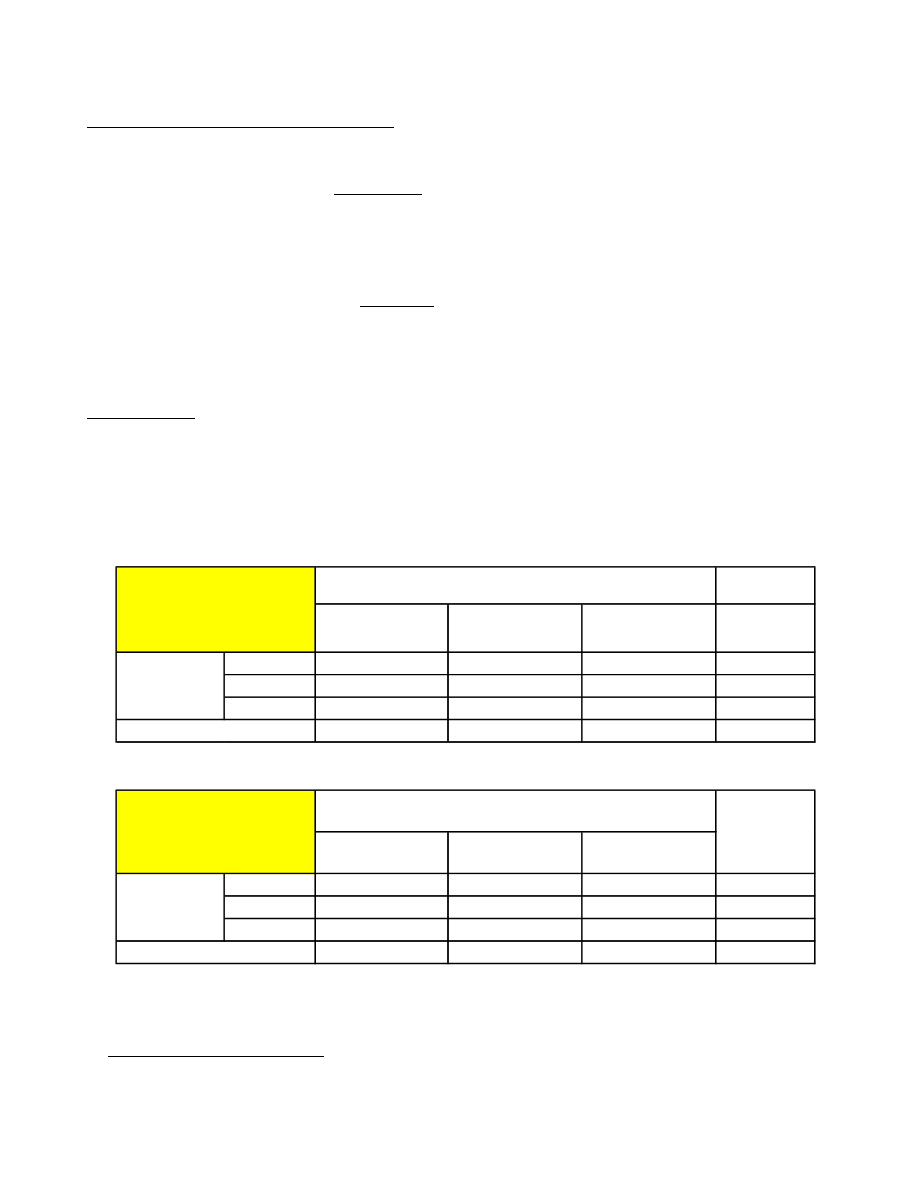
Data Analyzed. The following tables originated from a supporting excel spreadsheet.
2
In this case,
Table 1 is the actual survey data collected by the Trafalgar Group. Table 2 is the expected (or
calculated) survey data that is based on the fundamental mathematical definition of independence
[P(A∩B) = P(A)P(B)]. In the excel spreadsheet, there are two additional tables that apply this basic
mathematical equation as another reference point.
Table 1: Actual Survey Data
Table 2: Expected (or calculated) Survey Data
2
Note: The exact excel spreadsheet calculation is available upon request.
Democrat
No Party / Other
Republican
Total
Response
Not Sure
102
48
46
196
Oppose
109
51
26
186
Support
213
172
311
696
424
271
383
1078
Party Affiliation
Survey
Response
Survey Data
(Actual)
Total
Democrat
No Party / Other
Republican
Not Sure
77.1
49.3
69.6
196.0
Oppose
73.2
46.8
66.1
186.0
Support
273.8
175.0
247.3
696.0
424.0
271.0
383.0
1078.0
Survey Data
(Expected)
Party Affiliation
Total
Survey
Response
Total

Appendix B: Statistical Hypothesis Test in Support of State Convention
B-4
P-Value Calculations & Results. For this hypothesis test, the use of the Chi-Squared Distribution is
appropriate because it provides a p-value addressing independence between two categorical variables.
From the supporting excel spreadsheet, Table 3 depicts the p-value results and decision. Within excel,
the following formula was used to compare Tables 1&2:
=CHISQ.TEST(C10:C12,C18:C20)
.
Table 3: P-Value Results and Decision
In this situation, the overall (or total) decision is to reject the null hypothesis, and there is strong
statistical evidence to conclude a
dependent
relationship does exist between a person’s party affiliation
and survey response. Thus, the result answers the research question:
What type of relationship exists
between a person’s party affiliation and survey response (i.e., independent or dependent
relationship)?
Even though the overall (or total) hypothesis test concludes a dependent relationship does exist, there
was an interesting insight with the “No Party / Other” subcategory by itself. The calculated p-value
(0.79139) for this individual subcategory was significantly greater than alpha (α) = 0.01, and it means
there is an
independent
relationship with the survey responses. This specific result is an interesting
outcome because it indicates a potential attitude independent of political affiliation. In other words,
someone who is neither a “Democrat” nor a “Republican” is considered an “Independent.”
Overall Conclusion. The results of the statistical hypothesis test provide evidence that “Democrat” and
“Republican” responses are primarily based on “bias” (or dependent) because they are influenced by a
party affiliation / opinion. In the opposite way, the results of the overall statistical hypothesis test
provide evidence to support the “No Party / Other” responses are primarily “unbias” (or independent)
because they are not influenced by a party affiliation.
Support to State Convention. The results of this statistical hypothesis test support the need to have a
state convention vs. the state legislature as a mode of ratification. In the state legislature such as
Colorado, there are only Republicans and Democrats with some small number of other political parties.
Essentially, there are no “independents.” However, there is a greater opportunity to involve
“independents” in a state convention because it is a specific event held within a fairly short timeframe,
and it can be fairly equivalent as calling random citizens to participate in jury duty. Since a state
convention has a greater chance of involving “independents,” there is a greater chance for the event to
be “unbias” towards ratifying amendments (i.e., more objective than the state legislature).
Decision
Total
3.00319E-18
< 0.01
Reject Null
Democrat
3.24743E-09
< 0.01
Reject Null
No Party /
Other
0.791390572
> 0.01
Accept Null
Republican
2.58778E-11
< 0.01
Reject Null
Chi-Squared Distribution for Independence
P-Value (Chi-Squared Test)
P-Value (Chi-Squared Test)
P-Value (Chi-Squared Test)
P-Value (Chi-Squared Test)
alpha (
α
) = 0.01

Appendix C: Historical Ratification of Amendments
C-1
Since 1789, Congress proposed 33 Amendments to the states for ratification. There are
27 of these 33 Amendments that were ratified between 1791 to 1992, and the historical track
record is a fairly solid one (~82% success rate).
1
The table below shows their historical timelines
for ratification. The 21
st
Amendment is the only one ratified by state conventions, and the other
26 amendments were ratified by the state legislatures.
2
Amendment
Date Proposed by Congress
Date of Ratification
Timeframe
1
st
Bill of Rights proposed by
Congress on September 25, 1789.
Ratified December 15, 1791
Note: 27
th
Amendment was
part of the original bill
proposed in 1789. This
historical example shows how
all proposed amendments may
not ratify together. May also
happen with Article V
Convention proposed
amendments.
2.25 years
2
nd
3
rd
4
th
5
th
6
th
7
th
8
th
9
th
10
th
11
th
March 4, 1794
February 7, 1795
11 months
12
th
December 9, 1803
June 15, 1804
6 months
13
th
January 31, 1865
December 6, 1865
11 months
14
th
June 13, 1866
July 9, 1868
2.1 years
15
th
February 26, 1869
February 3, 1870
1 year
16
th
July 2, 1909
February 3, 1913
3.5 years
17
th
May 13, 1912
April 8, 1913
11 months
18
th
December 18, 1917
January 16, 1919
1.1 years
19
th
June 4, 1919
August 18, 1920
1.2 years
20
th
March 2, 1932
January 23, 1933
10 months
21
st
February 20, 1933
December 5, 1933
10 months
22
nd
March 21, 1947
February 27, 1951
4 years
23
rd
June 16, 1960
March 29, 1961
9 months
24
th
August 27, 1962
January 23, 1964
1.5 years
25
th
July 6, 1965
February 10, 1967
1.5 years
26
th
March 23, 1971
July 1, 1971
4 months
27
th
September 25, 1789
May 7, 1992
202 years
With the exception of the 27
th
Amendment, the historical record for ratifying amendments
is 4 years or less, and this represents another fairly solid historical track record. When it comes
to the other six unratified amendments, there is an interesting unique history for each one, and
they have a historical precedent that may impact future proposed amendments.
1
https:%%//%%crsreports.congress.gov
Congressional Research Service (CRS) Report R47959,
Proposals to Amend the U.S.
Constitution: Fact Sheet
, December 17, 2024, p.2
2
Source Archives Foundation:
https://archivesfoundation.org/amendments-u-s-constitution/

Appendix C: Historical Ratification of Amendments
C-2
The six unratified amendments proposed by Congress are listed below, and there is a
general status for each one of them.
3
Topic of Amendment Date Proposed to States General Status & Notes
Size of U.S. House or
Congressional
Apportionment
September 25, 1789
(note: part of original
“Bill of Rights”
proposal)
Still active? Very 1
st
Proposed
Amendment and no time limit for
ratification. 11 states ratified of 38 states
required.
4
Foreign Titles of
Nobility
May 1, 1810
Still active? No time limit for
ratification, and there is a question of its
current relevancy.
5
Protection of Slavery
March 2, 1861
No longer valid. Confederate States (11)
of America was formed. Later, 13
th
Amendment passed in December 1865.
6
Regulating Child
Labor
June 2, 1924
Still Outstanding/Stalled. No time limit
for ratification. 28 states ratified of 38
required. Most recent state to ratify was
1937; stalled for lack of momentum.
7
Equal Rights
Amendment
March 22, 1972
No longer active. Congress set original
time limit to pass within 7 years. 35
states ratified of 38 states required.
Congress provided extended timeline of
3 years but no additional states were able
to ratify. Some groups disputed the
inactive status for years.
8
DC Voting Rights
August 22, 1978
No longer active. Congress set original
time limit to pass within 7 years. 16
states ratified of 38 states required. No
dispute from any groups.
9
Beginning with the 18
th
Amendment (Prohibition), the U.S. Congress started to impose a
timeframe of 7 years for ratification even though Article V of the U.S. Constitution did not
specifically provide this power to the U.S. Congress.
10
The origin of the 7 years timeframe came
from U.S. Senator William Harding who used it as a political tool to “permit him and others to
vote for the amendment, thus avoiding the wrath of the ‘Drys’ (e.g., Anti-Saloon League).” At
3
https:%%//%%crsreports.congress.gov
/ Congressional Research Service (CRS) Report R47959,
Proposals to Amend the U.S.
Constitution: Fact Sheet
, December 17, 2024, p.2
4
Source National Archives:
https://prologue.blogs.archives.gov/2020/01/23/unratified-amendments/
5
Source National Archives:
https://prologue.blogs.archives.gov/2020/01/30/unratified-amendments-titles-of-nobility/
6
Source National Archives:
https://prologue.blogs.archives.gov/2020/02/19/unratified-amendments-protection-of-slavery/
7
Source National Archives:
https://prologue.blogs.archives.gov/2020/03/24/unratified-amendments-regulating-child-labor/
8
Source History of ERA:
https://www.equalrightsamendment.org/pathstoratification/
9
Source National Archives:
https://prologue.blogs.archives.gov/2020/06/17/unratified-amendments-dc-voting-rights/
10
https:%%//%%crsreports.congress.gov
Congressional Research Service (CRS) Report R42589,
The Article V Convention to Propose
Constitutional Amendments: Contemporary Issues for Congress,
March 29, 2016, p.26

Appendix C: Historical Ratification of Amendments
C-3
the same time, he expected time would run out before it was ratified.
11
The 18
th
Amendment was
ratified in 1.1 years, and it was clearly within 7 years. Eventually, there was debate as to whether
Congress could impose a time limit because Article V of the U.S. Constitution did not specify
this power to Congress. However, U.S. Supreme Court Cases
Dillion v. Gloss
(256 U.S. 368,
year 1921) and
Coleman v. Miller
(307 U.S. 433, year 1939) both upheld that Congress had the
power to “fix a definite period for the ratification” of amendments.
12
Overall, there are 10
historical amendments with timeframes associated with them for ratification, and there is a
distinction to note that some of them had the timeframe written within the
amendment text
and
others within the
joint resolution statement
made by Congress.
1.
18
th
Amendment (amendment text)
2.
20
th
Amendment (amendment text)
3.
21
st
Amendment (amendment text)
4.
22
nd
Amendment (amendment text)
5.
23
rd
Amendment (joint resolution statement)
6.
24
th
Amendment (joint resolution statement)
7.
25
th
Amendment (joint resolution statement)
8.
26
th
Amendment (joint resolution statement)
9.
Equal Rights Amendment (joint resolution statement)
10.
DC Voting Rights Amendment (amendment text)
The actual timeframe written within the
amendment text
of the five amendments became
officially part of the amendment itself and could not be changed. Thus, the timeframe for
ratification for these amendments could not be changed. However, the timeframe for ratification
written within the
joint resolution statement
by Congress could be changed because it was not a
permanent part of the amendment itself. The 18
th
, 20
th
-26
th
Amendments did not encounter any
issues with the timeframe requirement with either the
amendment text
or
joint resolution
statement
approaches. When the Equal Rights Amendment (ERA) was introduced in 1972, it
had a 7 year timeframe for ratification, and 35 states ratified it within the timeframe. However,
38 states were required. Consequently, Congress extended the deadline for another 3 years, yet
no additional states ratified the amendment. So, it was widely considered expired, but supporters
of the ERA argued otherwise. It was disputed for years.
13
In 1978, Congress proposed the DC
Voting Rights Amendment, and it wrote the timeframe for ratification within the
amendment text
to become a part of the amendment itself and to avoid any controversy like the ERA. Eventually,
the DC Voting Rights Amendment only acquired 16 states to ratify it when 38 states were
required. The timeframe of 7 years expired, and the amendment failed with no dispute.
14
11
https://crsreports.congress.gov/
Congressional Research Service (CRS) Report R42979,
The Proposed Equal Rights
Amendment: Contemporary Ratification Issues
, December 23 2019, p.28.
12
https://crsreports.congress.gov/
Congressional Research Service (CRS) Report R42979,
The Proposed Equal Rights
Amendment: Contemporary Ratification Issues
, December 23 2019, p.26-27 (section on “Role of the Supreme Court Decisions in
Dillion v. Gloss
and
Coleman v. Miller
”).
13
https://crsreports.congress.gov/
Congressional Research Service (CRS) Report R42979, The Proposed Equal Rights
Amendment: Contemporary Ratification Issues, December 23 2019, see “Summary” page.
14
https://crsreports.congress.gov/
Congressional Research Service (CRS) Report R42979, The Proposed Equal Rights
Amendment: Contemporary Ratification Issues, December 23 2019, p. 30-31

Appendix C: Historical Ratification of Amendments
C-4
The historical background of these ratified and proposed amendments to the U.S.
Constitution informs important lessons for consideration during the actual implementation of an
Article V Convention. Based on original intent, the framers of the U.S. Constitution granted the
same powers for an Article V Convention to propose amendments as the U.S. Congress. More
specifically, “the Article V Convention device was intended to provide an alternative method of
amendment, but it was also intended that a convention should enjoy a broad national consensus
of support and
meet similarly exacting standards as those that apply to amendments proposed in
Congress
.”
15
From this critical concluding statement from the Congressional Research Service
(CRS), it appears an Article V Convention has the same exact powers as Congress for proposing
written amendments to the U.S. Constitution to include a timeframe for ratification (e.g., 7 years)
and mode of ratification (state legislatures or state conventions). For example, each proposed
amendment from an Article V Convention could have the exact same written language as the 21
st
Amendment that reads: “Section 3. This article shall be inoperative unless it shall have been
ratified as an amendment to the Constitution
by conventions in the several States
, as provided in
the Constitution,
within seven years
from the date of submission hereof to the States by the
Congress.” However, there are multiple scholarly references throughout the various CRS reports
on an Article V Convention that explain it does not have the same exact powers as Congress for
written proposed amendments.
16
So, what is some of this scholarly discussion?
With respect to the timeframe for ratification, the Article V Convention shares the same
power as Congress for specifying a time limit because it is the proposing “agency” that also
specifies the timeframe. If the Article V Convention proposed an amendment without specifying
a timeframe for ratification, Congress could circumvent any proposed amendment it does not
support by specifying a timeframe for ratification such as 6-weeks. In this scenario, it is highly
unlikely 38 of 50 states will have enough time to ratify the amendment. To ensure this does not
happen, the Article V Convention should write the specific timeframe for ratification (e.g., 7
years) within the
amendment text
to become part of the amendment itself, and Congress cannot
change any language in the written proposed amendment.
17
With respect to the mode of ratification, an Article V Convention does not share the same
power as Congress. Congress has the power to specify the mode of ratification only for those
proposals within the Article V Convention call scale and scope. For example, the basic Article V
Convention commission is to “limit the power of the federal government,” and it cannot make
any proposed changes to the “Bill of Rights.” If the Article V Convention proposed an
amendment for term limits for members of Congress and another repealing the 1st Amendment,
15
https:%%//%%crsreports.congress.gov
Congressional Research Service (CRS) Report R44435,
The Article V Convention to Propose
Constitutional Amendments: Current Development
, November 15, 2017, p.20
16
https:%%//%%crsreports.congress.gov
- three CRS reports on Article V Convention.
1) CRS Report R42592,
The Article V Convention for Proposing Constitutional Amendments: Historical Perspectives for
Congress
, October 22, 2012
2) CRS Report R42589,
The Article V Convention to Propose Constitutional Amendments: Contemporary Issues for Congress
,
March 29, 2016
3) CRS Report R44435,
The Article V Convention to Propose Constitutional Amendments: Current Developments
, November 15,
2017
17
Proposing Constitutional Amendments by Convention: Rules Governing the Process
, by Robert G. Natelson, 78 Tennessee Law
Review 693, year 2011, p.750.

Appendix C: Historical Ratification of Amendments
C-5
then Congress would only specify a mode of ratification for the term limits amendment. The
other one would not be sent to the states for consideration. In this regard, Congress’ power is the
“same as if it had proposed the amendment” itself.
18
In a way, Congress serves as another check
to ensure the Article V Convention does not exceed its commission authority for proposed
amendments. Even though the Article V Convention proposed amendments do not have to
technically pass through Congress, the Constitution does mandate that Congress select a mode of
ratification for each one. It is possible for members of Congress to view selecting a mode of
ratification as a “discretionary duty,” and they would decide to do nothing with the proposed
amendment(s). Thus, they would sit dormant and not be sent to the states. If this sort of event
occurs, the Constitutional mandate for Congress to select a mode of ratification “should be
enforceable judicially.”
19
During the Article V Convention, there is a potential forcing function that commissioners
could write within the
amendment text
of each amendment itself to ensure Congress does not try
to circumvent the proposed amendment. As an example, each amendment can have
amendment
text
incorporating both timeframe for ratification and mode of ratification in the following
language: “Section #. This article shall be inoperative unless it shall have been ratified as an
amendment to the Constitution
within seven years
from the date of its submission to the
state
legislatures or conventions in accordance with the fifth article of this Constitution
. This article
shall become effective six months after ratification as an amendment to the Constitution.”
20
Here
are some benefits from including this example language within the
amendment text
.
•
The amendment contains seven years as the timeframe for ratification, and
Congress cannot change it or modify it later. The historical lessons learned from
the Equal Rights Amendment and DC Voting Rights Amendment ensure it.
•
The timeframe of ratification does not start until it is submitted to “state
legislatures or conventions.” It does not say time starts when submitted to
Congress for review. If Congress decides to delay its selection on a mode of
ratification for six months or a year for instance, the delay of six months or a year
are not counted against the seven years. If Congress delays longer than a year
with no sign in sight on when selecting a mode of ratification, then any time used
to enforce judicial action against Congress is also not counted against the seven
years.
•
The amendment includes both modes of ratification, but it does not specify which
one to use. In this manner, the Article V Convention is not trying to circumvent
the power of Congress to select a mode of ratification.
18
Proposing Constitutional Amendments by Convention: Rules Governing the Process
, p.748.
19
Proposing Constitutional Amendments by Convention: Rules Governing the Process
, p.749.
20
A Proposed Balanced Budget Amendment
, by Robert Natelson, July 27, 2017, The Heartland Institute. Note: in this published
article, the author explains a potential Balanced Budget Amendment (BBA) proposed by an Article V Convention. The author
incorporates a section addressing the timeframe for ratification and mode of ratification.

Appendix C: Historical Ratification of Amendments
C-6
Upon completion of the 1787 Philadelphia Convention, the President of the Convention
George Washington sent his executive letter to the Continental Congress with the
recommendation for a mode of ratification involving conventions of the several states. State
conventions as a mode of ratification were also stated within the language of Article VII of the
U.S. Constitution.
21
The executive letter idea is a historical precedent the Article V Convention
could follow to recommend the state convention mode of ratification, but there is no guarantee
the U.S. Congress would accept the recommendation.
This historical examination into the ratification of U.S. Constitution Amendments is
critical background for consideration in an Article V Convention and Colorado Ratifying
Convention (and other state conventions for that matter).
21
Resolution Transmitting the Constitution to Congress in Convention
, Monday, September 17, 1787, signed by President George
Washington. Note: the executive letter served as a summary of the overall convention results and way-forward for ratification of
the base U.S. Constitution.|
|
—-
| Page Metadata ||
|Login Required to view? |No |
|Created: |2025-03-14 23:48 GMT|
|Updated: |2025-03-14 23:48 GMT|
|Published: |2025-03-14 23:48 GMT|
|Converted: |2025-11-11 12:35 GMT|
|Change Author: |Vivian Garcia |
|Credit Author: |Mike Forbis |