
To view this on the COS website, click here 2025-texas-constitutional-amendments
To download the pdf file from the COS website, click here 2025_Texas_Constitutional_Amendments_Voters_Guide_v0_-COSTexas.pdf
2025 Texas Constitutional Amendments
Attachment: 4786/2025TexasConstitutionalAmendmentsVotersGuidev0-COSTexas.pdf
|

2025
Constitutional Amendments
Voter’s Guide
© 2025
A qr code with a star in the middle
AI-generated content may be incorrect.
Download Digital Copy
Compiled By Darren York
© 2025
txconstitutionalamendments.org

This Voter’s Guide is a compilation of publicly available information from the referenced
sources for voter educational and informational purposes only.
This guide is copyrighted for commercial purposes only. This guide is free to use, copy and
distribute for the sole purpose of voter education and information. This guide if used, copied or
distributed must be done free of charge regardless of the medium that it is provided, printed or
electronic).
For questions, feedback, request or to report unauthorized use or distribution of this guide,
please contact Darren York at
//[email protected]//
.
© 2025 by Darren York for 2025 Constitutional Amendments Voter’s Guide
Copyright and Permitted Use
© 2025
2

DIGITAL VERSION
This Voter’s Guide is available in a digital PDF version. In the digital version the QR codes are
hyperlinked to the source data/information unless a text URL link is provided in conjunction
with the QR code.
PRINTER VERSION
This Voter’s Guide if printed, provides QR codes for all references to source data/information
for the user’s ease of use, to provide easy digital access to the source data/information.
DATA / INFORMATION
The data/information provided in this guide is sourced from publicly available information with
the primary sources being provided from the Texas Constitution and Legislative Records
accessed through
//Texas Legislature Online//
.
ORGANIZATION
The Guide is organized to provide detailed information on each amendment proposition. At the
end of the detailed section is a reference summary to provide legislative links for fiscal notes,
bill analysis, and an enrolled bill summary. A second summary is provided with links for the full
text versions of the joint resolutions as well as any associated enabling legislation. The Guide
concludes with a Proposition Notes section that can be printed, completed and used as a
voting memory aid based when the user cast their ballot.
About This Guide
© 2025
3

How Is The Texas Constitution Amended? …………………………….
The History of the Texas Constitution & Amendments …………….
Voting Information ……………………………………………………………
Propositions Voter Information
Proposition 1 ……………………………………………………………………
Proposition 2 ……………………………………………………………………
Proposition 3 ……………………………………………………………………
Proposition 4 ……………………………………………………………………
Proposition 5 ……………………………………………………………………
Proposition 6 ……………………………………………………………………
Proposition 7 ……………………………………………………………………
Proposition 8 ……………………………………………………………………
Proposition 9 ……………………………………………………………………
Proposition 10 …………………………………………………………………
Proposition 11 …………………………………………………………………
Proposition 12 …………………………………………………………………
Proposition 13 …………………………………………………………………
Proposition 14 …………………………………………………………………
Contents
© 2025
4
6
7
12
13
14
16
18
20
22
24
26
28
30
32
34
36
38
40

Proposition 15 …………………………………………………………………
Proposition 16 …………………………………………………………………
Proposition 17 …………………………………………………………………
Additional References ………………………………………………………
By Proposition (Fiscal Notes, HRO Analysis, Enrolled Summary …..
By Proposition (Joint Resolution Text & Enabling Legislation ………..
All Propositions ……………………………………………………………….
Secretary of State Ballot Order (English/Spanish)
Secretary of State Proposition Explanatory Statements
(English/Spanish)
BallotPedia Proposition List / Details
Voter’s Notes …………………………………………………………………..
Contents
© 2025
5
42
44
46
48
48
49
50
51

How Is The Texas Constitution Amended?
1
2
The Texas Legislature must pass a joint
resolution proposing the constitutional
amendment with a two-thirds majority vote
in both the Texas House of Representatives
(100 votes) and the Texas Senate (21
votes)
Once the joint resolution is passed, the
proposed amendment is then submitted to
Texas voters for approval in a special
election (typically in November of odd
numbered years). The amendment becomes
part of the constitution if it receives a
majority of the votes cast.
Unlike bills, joint resolutions do not require the governor's signature and are filed directly with the secretary of state.
The Texas Two Step
© 2025
6

The History of the Texas Constitution and Its Amendments
The 1876 Texas Constitution, the fifth since statehood, had 289 sections organized into 17
articles.
Over the years, 234 new sections have been added, while 66 of the original sections and 52 of
the added sections have been removed, so that the Texas Constitution today has 405 sections.
Since 1876, the legislature has proposed 714 constitutional amendments. Of those
amendments, 530 have been approved by the electorate, 181 have been defeated, and 3
never made it to the ballot.
//https:%%//%%www.tlc.texas.gov/docs/amendments/constamend1876.pdf//
The Texas Constitution as amended through November 7, 2023 may
be found at the following link:
//https:%%//%%www.tlc.texas.gov/docs/legref/TxConst.pdf//
© 2025
7

© 2025
8
The History of Texas Constitutional Amendments
//https:%%//%%www.tlc.texas.gov/docs/amendments/constamend1876.pdf//
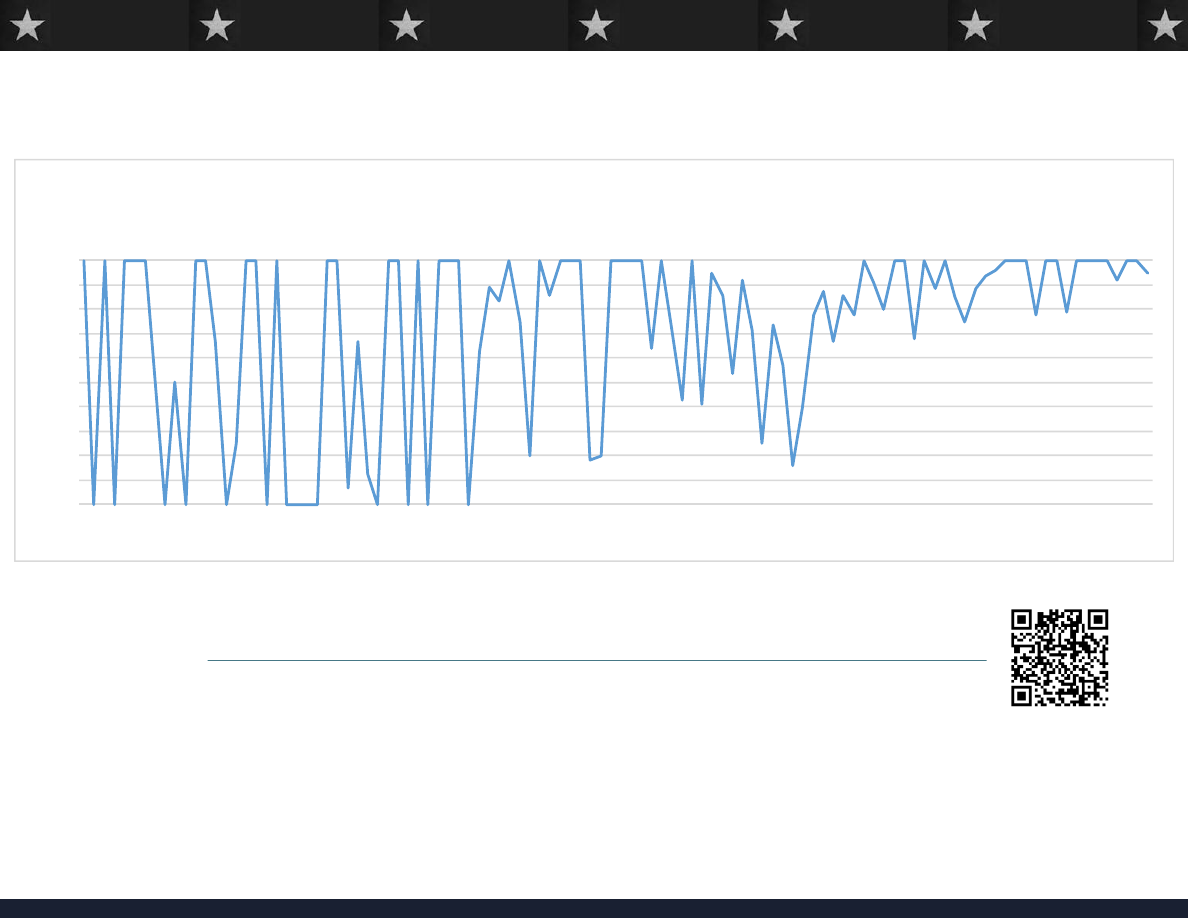
© 2025
9
The History of Texas Constitutional Amendments
//https:%%//%%www.tlc.texas.gov/docs/amendments/constamend1876.pdf//

© 2025
10
The History of Texas Constitutional Amendments
//https:%%//%%www.tlc.texas.gov/docs/amendments/constamend1876.pdf//
19
16
19
17
19
18
19
19
19
20
19
21
19
23
19
24
19
26
19
27
19
28
19
29
19
30
19
32
19
33
19
34
19
35
19
36
19
37
19
38
19
40
19
42
19
44
19
45
19
46
19
47
19
48
19
49
19
51
19
52
19
54
19
56
19
57
19
58
19
60
19
62
19
63
19
64
19
65
19
66
19
67
19
68
19
69
19
70
19
71
19
72
19
73
19
75
19
76
19
77
19
78
19
79
19
80
19
81
19
82
19
83
19
84
19
85
19
86
19
87
19
88
19
89
19
90
19
91
19
93
19
95
19
97
19
99
20
01
20
02
20
03
20
05
20
07
20
09
20
11
20
13
20
14
20
15
20
17
20
19
20
21
20
22
20
23
Adopted
1
2
1
2
1
1
5
4
6
12
4
5
8
5
1
3
1
3
Failed
1
14
1
7
9
3
8
3
1
1
1
4
Never Submitted
1
Total
1
1
2
15
3
8
1
1
5
9
4
3
6
12
4
8
8
9
6
1
4
5
3
% Adopted
0% 100% 100% 7%
67% 13%
0% 100% 100% 0% 100% 0% 100% 100% 100% 0%
63% 89% 83% 100% 75% 20% 100%
19
45
19
46
19
47
19
48
19
49
19
51
19
52
19
54
19
56
19
57
19
58
19
60
19
62
19
63
19
64
19
65
19
66
19
67
19
68
19
69
19
70
19
71
19
72
19
73
19
75
19
76
19
77
19
78
19
79
19
80
19
81
19
82
19
83
19
84
19
85
19
86
19
87
19
88
19
89
19
90
19
91
19
93
19
95
19
97
19
99
20
01
20
02
20
03
20
05
20
07
20
09
20
11
20
13
20
14
20
15
20
17
20
19
20
21
20
22
20
23
Adopted
6
4
2
9
2
1
2
29
11
3
7
6
11
3
3
7
18
6
8
55
5
1
14
Failed
1
9
4
4
4
4
10
1
7
5
2
3
5
Never Submitted
1
Total
7
4
2
9
11
5
2
29
11
3
11
6
15
7
3
17
19
7
15
60
7
4
19
% Adopted
86% 100% 100% 100% 18% 20% 100% 100% 100% 100% 64% 100% 73% 43% 100% 41% 95% 86% 53% 92% 71% 25% 74%

© 2025
11
The History of Texas Constitutional Amendments
//https:%%//%%www.tlc.texas.gov/docs/amendments/constamend1876.pdf//

© 2025
12
Texas Constitutional Amendments Voting Information
//https:%%//%%www.votetexas.gov///
ELECTION DAY

© 2025
13
2025
Constitutional Amendment
Propositions
In Order As They Will Appear On The Ballot

Bill Number: SJR59
Taxpayer Cost: $ 850 M
(Investment Fund Transfer)
Proposition 1
Ba
llo
t
W
or
ding
The constitutional amendment providing for the creation of the permanent technical institution infrastructure
fund and the available workforce education fund to support the capital needs of educational programs offered by
the Texas State Technical College System.
EXPLANATORY STATEMENT
LEGISLATIVE CONTEXT
Author:
Birdwell
Chamber Votes:
House [ D / R ] Senate [ D / R ]
YES
110
[ 47/63 ]
29
[ 11/18]
NO
16
[ 1/15 ]
2
[ 0/2 ]
NV
24
[14/10 ]
0
[ 0/0 ]
Support
BACKGROUND
Texas Legislature
Online Reference
82.7%
98.3%
R
D
Texas State Technical College (TSTC) was established in 1969 and is a public technical
college with 11 campuses. TSTC is governed by a board of regents with nine members
who are appointed by the governor for six-year terms. As of 2025, it offers associate
degrees and certificates in 48 programs across nine industries
—
allied health, aviation,
computer and information technology, construction and maintenance, engineering and
manufacturing, environmental and safety, hospitality, online programs, and transportation.
TEXAS CONSTITUTION IMPACT(S)
Article(s): 7
Add section(s): 21
Delete section(s):
Amend section(s): 17, 18
Full Resolution
Text
CONSTITUTIONAL HISTORY
Article 7, Section 17 was added to the Texas Constitution in 1984 with the approval of
Proposition 2 with 71.9% of voters supporting it. It authorized dedicated funding for 26
institutions of higher education. Section 17 requires the first $100 million collected by the
state that is not otherwise appropriated to be allocated to these institutions for capital
improvements. The amendment also authorized the legislature to change the
constitutionally required appropriation for the next five fiscal years by a two-thirds
supermajority vote of state legislators. Texas State Technical College (TSTC) was added
to the list of eligible institutions with the approval of Proposition 13 in 1993. It was
approved by a margin of 58.2% to 41.8%.
Proposition 1 would create the Available Fund or the Available Workforce Education Fund
and the Permanent Fund or the Permanent Technical Institution Infrastructure Fund as
special funds in the state treasury separate from the general fund to provide a dedicated \\ revenue source for capital projects and equipment purchases for the Texas State
Technical College System. These Funds will be seeded with an initial $850 million from
general revenue. The state Comptroller would be responsible for managing the funds..
© 2025
14

© 2025
15
Bill Number: SJR18
Proposition 1
STATEMENT OF INTENT / ANALYSIS
Texas State Technical College (TSTC) historically has been underfunded, with no consistently adequate capital funding to allow for strategic growth in
current or new campuses. With the record growth of employment rates in Texas, the skilled-labor shortage also continues to grow. TSTC has a long
history of proven performance in training highly skilled workers. This is why a large group of associations and businesses have been pushing for the
expansion of TSTC into the fastest growing regions of Texas for access to training facilities that produce the skilled workforce needed. S.J.R. 59
creates a reliable source of capital funding for TSTC to expand technical training in order to meet the growing skills gap in Texas and place more
Texans in great-paying jobs. S.J.R. 59 establishes a constitutionally dedicated, permanent endowment to fund the capital infrastructure needs of
career and technical education programs offered by TSTC.
POSITIONS
FAVOR
OPPOSE
Texas 2036, Texas Association of Manufacturers, Texas
Association of Builders, AGC-Texas Building Branch, Texas
Economic Development Council, Texas Recreational Vehicle
Association, Texas Trucking Association, Association of
Equipment Manufacturers, NFIB, Texas Construction Association,
Associated Builders and Contractors of Texas, Inc, Texas
Realtors, BASF Corporation, North Texas Commission, Texas
Chemistry Council, Advanced Power Alliance, Samsung Austin
Semiconductor, LLC., Dallas Regional Chamber, Texas
Solar+Storage Association, Lumbermen's Association of Texas
Texas Policy Research
“This legislation will be vital in ensuring that Texas has the
skilled workforce needed to meet the demands of our
booming economy!“ –
State Rep. Stan Lambert (R-71)
“While expanding access to workforce education supports
individual liberty and personal responsibility, embedding
this preferential funding mechanism in the Constitution
undermines limited government and transparency. A
statutory approach with normal budget oversight would
better uphold fiscal accountability.”
A
“Yes”
Vote supports the use of $850 million to establish these two special funds outside of the general revenue
fund to support the capital needs of the Texas Technical College System.
A
“No”
Vote opposes the use of $850 million to establish these two special funds outside of the general revenue
fund to support the capital needs of the Texas Technical College System.
Taxpayer Cost: $ 850 M
(Investment Fund Transfer)

Bill Number: SJR18
Proposition 2
Ba
llo
t
W
or
ding
The constitutional amendment prohibiting the imposition of a tax on the realized or unrealized capital gains of an
individual, family, estate, or trust.
EXPLANATORY STATEMENT
LEGISLATIVE CONTEXT
Author:
Perry
Chamber Votes:
House [ D / R ] Senate [ D / R ]
YES
104
[ 17/87 ]
25
[ 5/20]
NO
26
[ 26/0 ]
6
[ 6/0 ]
NV
20
[19/1 ]
0
[ 0/0 ]
Support
BACKGROUND
Texas Legislature
Online Reference
100.0%
40.7%
R
D
For tax year 2024, 42 states taxed capital gains. The highest rate for each state ranged
from 2.5% in Arizona to 14.4% in California. Eight states, including Texas, do not tax
capital gains. No state has enacted a tax on unrealized capital gains. California, Illinois,
New York, Vermont, and Washington have considered legislation that proposed taxing
unrealized capital gains.
The federal government taxes capital gains according to how long they were held by the
taxpayer. Short-term capital gains apply to capital assets held for less than a year, while
long-term capital gains apply to capital assets held for more than one year. Short-term
capital gains are taxed as regular income at the rate that applies to the taxpayer's income
bracket. Long-term capital gains are taxed according to filing status and income bracket..
TEXAS CONSTITUTION IMPACT(S)
Article(s): 8
Add section(s): 24-b
Delete section(s):
Amend section(s):
Full Resolution
Text
CONSTITUTIONAL HISTORY
Article 8 has been amended 3 times since 1993. In 1993 and 2019voters approved
prohibiting a personal income tax with 69% and 74% respectively. In 2023, voters
approved the prohibition of a wealth or net worth tax with 68%.
The amendment would amend Article 8 of the Texas Constitution to prohibit the Texas
State Legislature from imposing a tax on realized or unrealized capital gains of an
individual, family, estate, or trust, including a tax on the sale or transfer of the capital
asset.
A capital asset is property held for personal investment, like stocks, bonds, real estate,
and personal vehicles. Realized gains are the profits an individual makes from selling that
investment. In contrast, unrealized gains represent the potential profit an individual could
make if they were to sell an investment at its current market value.
The amendment would also add language stating that the prohibition would not apply to
ad valorem taxes on property, sales taxes on goods and services, or a use tax on the
storage, use, or other consumption of goods and services within the state.
© 2025
16
Taxpayer Cost: $ 344 K (’26)
($152 K Annually) See Fiscal Note @ TLO

© 2025
17
Bill Number: SJR18
Proposition 2
STATEMENT OF INTENT / ANALYSIS
Currently, several states do not have a state income tax, including Texas. Although state law in the State of Washington prohibits the state from
adopting an income tax, the Washington Legislature successfully enacted a capital gains tax that has survived court challenges. Many Texans were
previously reassured that Texas would not be able to enact a capital gains tax because the state has a constitutional amendment barring the
establishment of an income tax. However, after this recent development in the State of Washington and discussions in Congress about taxing
unrealized capital gains, many Texans are concerned that a future legislature could enact a capital gains tax. This constitutional amendment would
prohibit Texas from ever enacting a capital gains tax on realized or unrealized capital gains of an individual, family, estate, or trust. This amendment
will ensure Texas remains a tax friendly state. S.J.R. 18 proposes a constitutional amendment prohibiting the imposition of a tax on the realized
or unrealized capital gains of an individual, family, estate, or trust.
POSITIONS
FAVOR
OPPOSE
Texas Fram Bureau, Texas Policy Research
“This measure upholds individual liberty, private property
rights, and free enterprise by protecting Texans from future
financial intrusion and double taxation. It strengthens
Texas’s commitment to limited government and long
-term
economic competitiveness.”
- Texas Policy Research
A
“Yes”
Vote supports the prohibition of the state legislature from enacting a tax on realized or unrealized capital
gains of an individual, family, estate, or trust, including a tax on the sale or transfer of a capital asset.
A
“No”
Vote opposes the prohibition of the state legislature from enacting a tax on realized or unrealized capital
gains of an individual, family, estate, or trust, including a tax on the sale or transfer of a capital asset.
Taxpayer Cost: $ 344 K (’26)
($152 K Annually) See Fiscal Note @ TLO

Bill Number: SJR5
Proposition 3
Ba
llo
t
W
or
ding
The constitutional amendment requiring the denial of bail under certain circumstances to persons accused of
certain offenses punishable as a felony.
EXPLANATORY STATEMENT
LEGISLATIVE CONTEXT
Author:
Huffman
Chamber Votes:
House [ D / R ] Senate [ D / R ]
YES
133
[ 46/87 ]
31
[ 11/20]
NO
8
[ 8/0 ]
0
[ 0/0 ]
NV
9
[8/1 ]
0
[ 0/0 ]
Support
BACKGROUND
Texas Legislature
Online Reference
100.0%
87.7%
R
D
Bail is an amount of money a defendant must pay in order to be released from custody while
awaiting their trial. Bail is an assurance that the defendant will attend all required trials. Bail is
returned to the defendant after a trial is over. A judge or magistrate determines a proper bail amount
to set for a defendant based on their criminal history, prior court appearances, community ties, risk
to the community and law enforcement, and likelihood of appearance in court.
TEXAS CONSTITUTION IMPACT(S)
Article(s): 1
Add section(s): 11-d
Delete section(s):
Amend section(s):
Full Resolution
Text
CONSTITUTIONAL HISTORY
Texas voters have decided on five constitutional amendments related to denying bail.
Each was approved with at least 79% of the vote.
Proposition 3 would propose a constitutional amendment to require that bail be denied pending trial to
a person accused of one or more of the following felony offenses if the state demonstrated by clear
and convincing evidence after a hearing that granting bail would have been insufficient to reasonably
prevent the person’s willful nonappearance in court or ensure the safety of the community, law
enforcement, and victim of the alleged offense: murder; capital murder; aggravated assault if the
person caused serious bodily injury or used a firearm, club, knife, or explosive weapon; aggravated
kidnapping; aggravated robbery; aggravated sexual assault; indecency with a child; trafficking of
persons; or continuous trafficking of persons.
© 2025
18
Taxpayer Cost: Undetermined
See Fiscal Note @ TLO
Section 11 of Article 1 of the Texas Constitution guarantees all prisoners the right to bail
with the following exceptions: capital offenses, an accused who has twice been convicted \\ of a felony, an accused who has committed a felony while on bail for a prior felony they
were indicted for, a person accused of a felony with a deadly weapon after being
convicted of a prior felony, or a person accused of a violent or sexual offense committed while under
the supervision of a criminal justice agency of the State or a political subdivision of the State for a
prior felony.
The constitution also currently authorizes judges or magistrates to deny bail following a hearing if the
offender is accused of a felony or an offense involving family violence and is released on bail
pending trial, and whose bail is subsequently revoked or forfeited for violating the conditions of
release.

© 2025
19
Bill Number: SJR5
Proposition 3
STATEMENT OF INTENT / ANALYSIS
,
The current options for denying bail pending trial effectively require a full trial on the merits at the time bail is denied, or shortly thereafter. This leads
to rare utilization, even in the most appropriate situations to ensure public safety. Currently, magistrates may only deny bail under very limited
circumstances. This means defendants accused of most crimes, including murder, must be released if they have the money to post bond, even if
there is clear and convincing evidence that the individual may commit future violent crimes. Specifically, this amendment would give magistrates the
ability to deny bail to individuals accused of committing: (1) a sexual offense punishable as a felony of the first degree; (2) a violent offense as
defined by the Texas Constitution; or (3) continuous trafficking of persons. For bail to be denied for one of these offenses, a judge or magistrate
must determine by clear and convincing evidence that the denial of bail is necessary to ensure either: the person's appearance in court; or the safety
of the community, law enforcement, or the victim of the alleged offense. A judge or magistrate who denies bail would be required to issue a written
order laying out their findings of fact and explaining why the denial of bail is necessary.
POSITIONS
FAVOR
OPPOSE
Crime Stoppers, TPPF, TMPA, Austin Police Assoc., The
Professional Bondsman of Texas, HRBC, Sheriff’s Assoc. of
Texas, FOP 39, HPOU, SAPOA, TGWPOA, SAPD, DPA, City of
Houston, Upbring, CLEAT, Texas Police Chief’s Assoc.,
“This historic vote shows that the Texas House has decided
to put public safety above party politics. This collaboration
will undeniably make Texas stronger and our communities
safer.” - Nikki Pressley, Texas state director of Right on Crime
at the Texas Public Policy Foundation
A
“Yes”
Vote supports the denial bail to individuals accused of certain violent or sexual offenses punishable as a
felony.
A
“No”
Vote opposes the denial bail to individuals accused of certain violent or sexual offenses punishable as a
felony.
Texas Civil Rights Project, American Civil Liberties Union of
Texas, Texas Jail Project, The Bail Project, LatinoJustice
PRLDEF, Texas Criminal Defense Lawyers Association, Vera
Institute of Justice, Texas Policy Research
“While aimed at improving public safety, this amendment
undermines individual liberty by expanding pretrial detention
without conviction and curtails judicial discretion. It creates
a rigid, constitutionally enshrined mandate that risks
overreach, erodes due process, and expands the scope of
government authority without adequate safeguards.” –
Texas
Research Project
Taxpayer Cost: Undetermined
See Fiscal Note @ TLO

Bill Number: HJR7
Proposition 4
Ba
llo
t
W
or
ding
The constitutional amendment to dedicate a portion of the revenue derived from state sales and use taxes to the
Texas water fund and to provide for the allocation and use of that revenue.
EXPLANATORY STATEMENT
LEGISLATIVE CONTEXT
Author:
Harris|Hunter|Martinez|Kitzman|Metcalf
Chamber Votes:
House [ D / R ] Senate [ D / R ]
YES
134
[ 52/70 ]
31
[ 11/20]
NO
12
[ 0/12 ]
0
[ 0/0 ]
NV
16
[10/6 ]
0
[ 0/0 ]
Support
BACKGROUND
Texas Legislature
Online Reference
88.2%
100.0%
R
D
The Texas Water Fund (TWF) is a special fund in the state treasury outside of the general fund. Money \\ in the fund can only be transferred to the Water Assistance Fund, the New Supply Fund, the Water
Implementation Fund, the State Water Implementation Revenue Fund for Texas, the Financial
Assistance for Water Pollution Control, Rural Water Assistance Fund, the state Water Account, the
Financial Assistance Account, and the state Participation Account. Distributions to water infrastructure \\ projects will prioritize projects in rural political subdivisions or municipalities with a population of less
than 150,000.
TWF is administered by the Texas Water Development Board (WDB). The fund received a one-time
appropriation of $1 billion in 2023 through the supplemental appropriations bill (Senate Bill 30) and an \\ additional $2.5 billion from the latest supplemental budget passed during the 2025 regular legislative
session (House Bill 500). The WDB oversees state programs related to the conservation and
development of water resources in Texas.
The implementing legislation is SB7 which was passed during the 2025 regular session.
The latest state water plan, published by the TWD was released in 2022 and show totals by decade
from 2020 to 2070. As of 2025, the state sales tax rate was 6.25% with local jurisdictions with an
additional levy of up to 2%. Sales tax revenues from 2014 to 2024 are included in the Texas
Comptroller's report “Sources of Revenue” (July 2025)
TEXAS CONSTITUTION IMPACT(S)
Article(s): 3, 8
Add section(s):
Delete section(s):
Amend section(s): 49-d-16, 7-e
Full Resolution
Text
CONSTITUTIONAL HISTORY
The Texas Water Fund (TWF) was established with the approval of Proposition 6 in 2023 by 77.7%
of voters. The Texas Water Development Board (WDB) was created in 1957 with the passage of
Proposition 2 with 74% of voters.
Proposition 4 would amend the Texas Constitution to authorize the Texas State Legislature to require the comptroller to
annually allocate the first $1 billion in net sales tax revenue after revenue exceeds $46.5 billion to the Texas Water Fund.
The comptroller's authority to allocate the first $1 billion would expire on August 31, 2047.
© 2025
20
Taxpayer Cost: $ 1 B (
per annum
)
(2028 - 2047) See Fiscal Note @ TLO
The allocation would be administered in a separate account in the fund, and the amendment would prohibit
the use of the funds unless an appropriation law is passed. The amendment would also prohibit the state
legislature from changing the law that requires the allocation for the first 10 years. If a state of disaster is
declared, the allocation may be suspended through either the regular budget process or a concurrent
resolution approved by a majority of state legislators. Proposition 4 would prohibit the transfer of sales tax \\ revenue allocated to the Texas Water Fund to the New Water Supply for Texas Fund for financing
groundwater infrastructure projects. The amendment would take effect on September 1, 2027.

© 2025
21
Bill Number: HJR7
Proposition 4
STATEMENT OF INTENT / ANALYSIS
,
Texas is facing a severe long-term water supply deficit and significant funding shortfall for all types of water-related infrastructure. By 2070, the 2022 Texas State Water
Plan (SWP) projects a water supply shortfall of up to 6.86 million acre-feet annually. Taken together, the accelerating rates of population growth and economic
development and the increasing drought severity and frequency experienced in Texas since the 2022 iteration of the SWP was published three years ago suggest that
projected shortfall is actually underestimated. Extrapolating from the consequences of the 2011 drought, a report commissioned in 2024 by Texas 2036 found that the
Texas economy could lose approximately 785,000 jobs and suffer $160 billion in lost gross domestic product (GDP) by the end of the 2030s attributable to water scarcity
if left unaddressed. The report found that the Texas power grid is acutely susceptible to water scarcity; 82,100 megawatts, or 53.9 percent, of the current Texas power
generation capacity relies on significant volumes of water for steam generation and/or cooling. During testimony, before the SWARA Committee in February 2025, the
Texas Water Development Board estimated projected funding needs of approximately $8 billion for water treatment projects, $54.5 billion for flood infrastructure projects,
and $80 billion for SWP projects. In its report, Texas 2036 estimated $153.8 billion in total water-related financial assistance needs over the next 50 years. As engrossed,
H.J.R. 7 satisfies Governor Abbott's emergency request by constitutionally dedicating $1billion in sales and use tax revenues to the Texas Water Funding each state fiscal
year beginning with FY 2028. As substituted, H.J.R. 7 satisfies the SWARA Committee recommendation by allocating 80 percent of the funding for NWSTF projects during
the initial term of the dedication.
POSITIONS
//** **//
//** **//
FAVOR
OPPOSE
Texas Assoc. of Manufacturers, The Nature Conservancy in TX, TXWIN,
Texas Water Supply Partners, Texas Water Association, Greater Houston
Partnership, Texas 2036, Lower Colorado River Authority, Brazos River
Authority, EDF, National Wildlife Federation, AGC of Texas, Texas Assoc.
of Business, Texas Farm Bureau, Texas Realtors, Texas Rural Water
Assoc., Texas Oil & Gas Assoc., GBRA, …more
“Texas 2036 projects that the state will need to invest at least $154
billion in the coming decades toward expanding our water supply
portfolio and fixing aging, deteriorating systems. We estimate that
existing state and federal funding programs will cover roughly 25% of
this need. This will leave a long-term water infrastructure funding
gap of $110 billion. HJR 7 addresses this problem, in part, with its $1
billion per year revenue dedication to the Texas Water Fund.“ –
Texas
2036
A
“Yes”
Vote supports allocation of the first $1 billion per fiscal year of sales tax revenue after it exceeds $46.5
billion to the state water fund and authorize the state legislature, by a two-thirds vote, to adjust the amount allocated.
A
“No”
Vote opposes allocation of the first $1 billion per fiscal year of sales tax revenue after it exceeds $46.5 billion
to the state water fund and authorize the state legislature, by a two-thirds vote, to adjust the amount allocated.
Texas Policy Research
HJR 7 would not provide sufficient funding to secure the state’s water
future given the size of projected water funding needs. As such, the
resolution should not allow the Legislature to reduce the annual
funding by concurrent resolution.
In addition, the resolution should explicitly dedicate part of the annual
funding to new water supply development. Without new water supply
investments, the state risks overdependence and possible depletion
of groundwater resources due to water exports from rural areas to
urban centers.
Taxpayer Cost: $ 1 B (
per annum
)
(2028 - 2047)
See Fiscal Note @ TLO

Bill Number: HJR99
Proposition 5
Ba
llo
t
W
or
ding
The constitutional amendment authorizing the legislature to exempt from ad valorem taxation tangible personal
property consisting of animal feed held by the owner of the property for sale at retail.
EXPLANATORY STATEMENT
LEGISLATIVE CONTEXT
Author:
Harris
Chamber Votes:
House [ D / R ] Senate [ D / R ]
YES
102
[ 17/85 ]
30
[ 10/20]
NO
5
[ 4/1 ]
1
[ 1/0 ]
NV
43
[41/2 ]
0
[ 0/0 ]
Support
BACKGROUND
Texas Legislature
Online Reference
99.1%
84.4%
R
D
In 1968, Texas voters adopted Proposition 7, which provided for a gradual reduction in
the state property tax and eventual abolishment after 1978, with exceptions for certain
institutions of higher learning. In 1982, this exception for certain higher education
institutions to levy state ad valorem property taxes was repealed with the passage of
Proposition 1. As of 2025, only local taxing units, cities, counties, school districts, junior
colleges, and special districts levy ad valorem taxes.
TEXAS CONSTITUTION IMPACT(S)
Article(s): 8
Add section(s): 1-s
Delete section(s):
Amend section(s):
Full Resolution
Text
CONSTITUTIONAL HISTORY
Adding a new section to Article 8.
HJR 99 proposes a constitutional amendment to allow the legislature to exempt animal
feed held by the owner for retail sale from ad valorem taxation. The proposed
amendment would authorize the legislature to provide additional eligibility requirements
for the exemption.
© 2025
22
Taxpayer Cost: Undetermined
See Fiscal Note @ TLO

© 2025
23
Bill Number: HJR99
Proposition 5
STATEMENT OF INTENT / ANALYSIS
,
H.J.R. 99 proposes a constitutional amendment authorizing the legislature to exempt from ad valorem taxation tangible personal property consisting of animal feed
held by the owner of the property for sale at retail.
POSITIONS
//** **//
//** **//
FAVOR
OPPOSE
Texas Farm Bureau, Colony Ranch Supply, Inc., Texas Policy Research,
Individual
“By reducing a targeted tax burden on agricultural retailers, this
measure promotes free enterprise and strengthens private property
rights. Though exemptions should be used cautiously, this
permissive amendment gives the Legislature flexibility to deliver
fairer tax treatment without mandating new spending.“ –
Texas
Policy Research
A
“Yes”
Vote supports authorizing the state legislature to pass a property tax exemption on animal feed held by the
property owner for retail sale.
A
“No”
Vote opposes authorizing the state legislature to pass a property tax exemption on animal feed held by the
property owner for retail sale.
Individuals
Taxpayer Cost: Undetermined
See Fiscal Note @ TLO

Bill Number: HJR4
Proposition 6
Ba
llo
t
W
or
ding
The constitutional amendment prohibiting the legislature from enacting a law imposing an occupation tax on
certain entities that enter into transactions conveying securities or imposing a tax on certain securities
transactions.
EXPLANATORY STATEMENT
LEGISLATIVE CONTEXT
Author:
Meyer|Button|Vasut|Moody|Anchia
Chamber Votes:
House [ D / R ] Senate [ D / R ]
YES
111
[ 28/83 ]
28
[ 8/20]
NO
31
[ 27/4 ]
3
[ 3/0]
NV
8
[7/1 ]
0
[ 0/0 ]
Support
BACKGROUND
Texas Legislature
Online Reference
96.3%
54.5%
R
D
In January 2025, a group led by Texas Stock Exchange CEO James Lee and financed by institutional
investors, including Charles Schwab, Fortress, BlackRock, and Citadel Securities, announced plans
to file and begin operating a national stock exchange headquartered in Dallas, Texas, starting in
2026. The exchange would facilitate listings of public companies, exchange-traded products (ETPs),
and American depositary receipts (ADRs). The U.S. has 13 stock market exchanges as of 2025.
New York had a financial transaction tax from 1905 to 1981, when the New York Stock Exchange
considered leaving the state due to the tax. The tax is still in state law, but the state now offers a
100% rebate on the tax, effectively making it null. A bill by State Rep. Phil Steck (D-110) proposed
during the 2019-2020 legislative session would have repealed the rebate and taxed the sale of a
stock between $0.0125 and $0.05, depending on the value of the stock being sold. Rep. Steck
pointed to international exchanges that have similar taxes, saying, ”Every single significant exchange
in the world has a financial transaction tax save one, which is Germany, and they've proposed it
there.During the 2020-2021 legislative session, the New Jersey State Legislature proposed
Assembly Bill 4402, which proposed imposing a tax on high-quantity processors of financial
transactions at $0.0025 per transaction. The bill was referred to the Assembly Financial Institutions
and Insurance Committee, but it did not receive a vote by either chamber.
TEXAS CONSTITUTION IMPACT(S)
Article(s): 8
Add section(s): 30
Delete section(s):
Amend section(s):
Full Resolution
Text
CONSTITUTIONAL HISTORY
Since 1993, Texas voters have decided on three amendments to prohibit future taxes by adding the
prohibitions to the state constitution. All three were approved. In 2025, voters will decide on three
amendments to prohibit future taxes. 2023: Proposition 3 to Prohibit a wealth or net worth tax, 2019:
Proposition 4 to prohibit the state from levying an income tax on individuals, and 1993:Proposition 4
to prohibit personal income tax without voter approval, directing revenue to education and limiting
local school tax rules. Each was approved by 68%, 74% and 69% respectively.
© 2025
24
Taxpayer Cost: $ 0
a constitutional amendment to prohibit the legislature from enacting a law that
imposes an occupation tax on a registered securities market operator or a tax on a securities transaction
conducted by a registered securities market operator. The proposed amendment would not prohibit the
imposition of a general business tax measured by business activity, a tax on the production of minerals, a
tax on insurance premiums, a sales and use tax on tangible personal property or services, or a fee based
on the cost of processing or creating documents. The proposed amendment would also not prohibit a
change in the rate of a tax in existence on January 1, 2026.

© 2025
25
Bill Number: HJR4
Proposition 6
STATEMENT OF INTENT / ANALYSIS
,
During the COVID-19 pandemic, New York and New Jersey proposed financial transaction taxes, prompting concerns about retirement investments
and causing New York and Nasdaq to consider relocating to Texas. With many individuals relying on 401(k)s, IRAs, and pensions for retirement,
concerns arose that such a tax could reduce returns and hinder savings. Though both states abandoned the proposals, the risk remains. With Texas'
development of a fully integrated stock exchange, H.J.R. 4 proposes a constitutional amendment to ban new taxes on securities transfers and
financial transactions, protecting Texans and businesses. H.J.R. 4 proposes a constitutional amendment prohibiting the enactment of a law imposing
an occupation tax on certain entities that enter into transactions conveying securities or imposing a tax on certain securities transactions.
POSITIONS
//** **//
//** **//
FAVOR
OPPOSE
Texas Stock Exchange (TXSE), Texas Policy Research
“This measure affirms limited government, free enterprise, and
private property rights by protecting investment activity from
targeted taxation. It preserves Texas’s pro
-business climate without
fiscal downside, safeguarding both institutional and individual
investors from government interference.” –
Texas Policy Research
A
“Yes”
Vote supports the prohibition of laws that impose an occupation tax on a registered securities market
operator or a securities transaction tax.
A
“No”
Vote opposes the prohibition of laws that impose an occupation tax on a registered securities market
operator or a securities transaction tax.
True Texas Project, Individual
Taxpayer Cost: $ 0

Bill Number: HJR133
Proposition 7
Ba
llo
t
W
or
ding
The constitutional amendment authorizing the legislature to provide for an exemption from ad valorem taxation
of all or part of the market value of the residence homestead of the surviving spouse of a veteran who died as a
result of a condition or disease that is presumed under federal law to have been service-connected.
EXPLANATORY STATEMENT
LEGISLATIVE CONTEXT
Author:
Turner|Button|Cook|Cortez|Garcia L.
Chamber Votes:
House [ D / R ] Senate [ D / R ]
YES
111
[ 28/83 ]
28
[ 8/20]
NO
31
[ 27/4 ]
3
[ 3/0]
NV
8
[7/1 ]
0
[ 0/0 ]
Support
BACKGROUND
Texas Legislature
Online Reference
96.3%
54.5%
R
D
A homestead property tax exemption reduces the taxable value of a residence. The taxable value
can either be the market value or the property's assessed value. Market value is the price at
which the property would be sold. Assessed value is calculated by applying an assessment ratio
to the market value.
House Bill 2508 (HB 2508) is the implementing legislation for the amendment, and it was also
passed during the 2025 legislative session. It will take effect if Proposition 7 is approved. HB
2508 authorizes a property tax exemption for the total appraised value of the homestead of a
surviving spouse of a veteran killed by a service-connected disease, regardless of disability
status at the time of death. The surviving spouse would qualify for the exemption as long as
they have not remarried and the service-connected disease is a qualifying condition or disease
under the Sergeant First Class Heath Robinson Honoring our Promise to Address
Comprehensive Toxics Act of 2022, also known as the PACT Act. A surviving spouse would also
be able to receive a homestead property tax exemption on a new property in an amount equal to
the dollar amount of the exemption on the first property if the surviving spouse has not
remarried.
TEXAS CONSTITUTION IMPACT(S)
Article(s): 8
Add section(s): 30
Delete section(s):
Amend section(s):
Full Resolution
Text
CONSTITUTIONAL HISTORY
Between 1972 and 2021, Texas voters decided on eight constitutional amendments
related to tax exemptions for veterans. All eight were approved with at least 69% of the
vote.
© 2025
26
HJR 133 proposes a constitutional amendment to allow the legislature to give surviving
spouses of United States armed services veterans a property tax exemption on their
residence homestead. The proposed amendment would exempt all or part of the
property tax on the spouse’s residence homestead if the veteran died from a condition
or disease presumed under federal law to be service-related. The exemption would
apply only to a surviving spouse who has not remarried since the veteran’s death.
Taxpayer Cost: Undetermined
See Fiscal Note @ TLO for Local Implications

© 2025
27
Bill Number: HJR133
Proposition 7
STATEMENT OF INTENT / ANALYSIS
According to a 2024 study on veterans in Texas prepared by the Texas Workforce Investment Council, approximately 1.5 million individuals 18 years
of age and older in Texas were veterans in 2021. Current state law entitles a veteran who is rated as 100 percent disabled due to a service connected
disability to an exemption from property taxation of the total appraised value of the veteran's residence homestead, and when a 100 percent disabled
veteran passes away, a qualifying surviving spouse is entitled to the same residence homestead exemption for the property to which the veteran's
exemption applied. However, the resolution author has informed the committee that a gap exists in current law with respect to veterans who pass
away due to a condition or disease for which the federal Sergeant First Class Heath Robinson Honoring our Promise to Address Comprehensive
Toxics (PACT) Act of 2022 establishes a presumption of service connection but who are not yet rated as 100 percent disabled at the time of the
veteran’s death, in which case the surviving spouse is not entitled to a residence homestead exemption. H.J.R. 133 seeks to
address this issue by
authorizing the legislature to entitle the surviving spouse of a veteran who died as a result of a qualifying condition or disease presumed under
federal law to have been service-connected to certain exemptions from property taxation.
POSITIONS
//** **//
//** **//
FAVOR
OPPOSE
The American Legion Dept of Texas, Texas Policy Research
“This measure honors the sacrifices of military families and protects
individual liberty and property rights. While further exemptions
complicate the tax system, this narrowly targeted relief is justified. It
should, however, be accompanied by broader property tax reform to
maintain equity and simplicity.” –
Texas Policy Research
A
“Yes”
Vote supports authorizing the state legislature to establish a property tax exemption on all or part of the
market value of the homestead of a surviving spouse of a veteran who died from a service-connected disease.
A
“No”
Vote opposes authorizing the state legislature to establish a property tax exemption on all or part of the
market value of the homestead of a surviving spouse of a veteran who died from a service-connected disease.
Taxpayer Cost: Undetermined
See Fiscal Note @ TLO for Local Implications

Bill Number: HJR2
Proposition 8
Ba
llo
t
W
or
ding
The constitutional amendment to prohibit the legislature from imposing death taxes applicable to a decedent's
property or the transfer of an estate, inheritance, legacy, succession, or gift.
EXPLANATORY STATEMENT
LEGISLATIVE CONTEXT
Author:
Turner|Button|Cook|Cortez|Garcia L.
Chamber Votes:
House [ D / R ] Senate [ D / R ]
YES
112
[ 25/87 ]
27
[ 7/20]
NO
29
[ 29/0 ]
3
[ 3/0]
NV
9
[8/1 ]
1
[ 1/0 ]
Support
BACKGROUND
Texas Legislature
Online Reference
100.0%
50.0%
R
D
An estate tax is a tax levied on the total value of a deceased person's property that is being
transferred to their heirs, which means that it is paid by the estate and not the heirs. An inheritance
tax is a tax levied on the assets received by an heir, so it is paid by the heir. Texas currently does
not have an estate or an inheritance tax.
For tax year 2024, 12 states imposed an estate tax, six states imposed an inheritance tax, and one
state
—
Maryland
—
imposed both an estate and an inheritance tax. The majority of estate and
inheritance taxes levied by states are progressive, meaning the tax rate increases as the value of
taxable assets increases. The states with the highest marginal rates are Hawaii and Washington, at
rates of 20% for estates valued at $15.49 million and $9 million, respectively. Kentucky and New
Jersey have the highest marginal inheritance tax rates of 16%
During the 2015 legislative session, the Texas State Legislature passed Senate Bill 752 (SB 752)
repealing the state's inheritance tax. The state tax was initially structured to equal the federal estate
tax credit for estate taxes collected by the states. However, with changes to the federal tax
structure, including the elimination of the credit in 2005, Texas estate tax revenue became zero. SB
752 also repealed the tax on combative sports events, like boxing, kickboxing, and mixed martial
arts.
TEXAS CONSTITUTION IMPACT(S)
Article(s): 8
Add section(s): 26
Delete section(s):
Amend section(s):
Full Resolution
Text
CONSTITUTIONAL HISTORY
Since 1993, Texas voters have decided on three amendments to prohibit future taxes by adding the
prohibitions to the state constitution. All three were approved by 68% or greater. In 2025, voters will
decide on three amendments to prohibit future taxes(Propositions 2, 6, 8).
© 2025
28
HJR 2 proposes a constitutional amendment to prohibit the legislature from imposing a state tax on a
deceased individual’s estate because of the individual’s death, including an estate, inheritance, or death
tax. The proposed amendment would prohibit the legislature from imposing a state tax on the transfer of
an estate, inheritance, legacy, succession, or gift from an individual, family, estate, or trust, including
generation-skipping transfers, if the tax was not in effect on January 1, 2025. The proposed amendment
would also prohibit the legislature from increasing the tax rate or expanding the applicability to new
parties of a transfer tax that was in effect on January 1, 2025. The proposed amendment would not
prohibit the imposition or change in the rate or applicability of a general business tax measured by
business activity; a tax on the production of minerals; a tax on the issuance of title insurance; a tax in
existence on January 1, 2016; a tax on the transfer of a motor vehicle by gift; or an ad valorem tax on
property.
Taxpayer Cost: $0

© 2025
29
Bill Number: HJR2
Proposition 8
STATEMENT OF INTENT / ANALYSIS
Texas used to collect a Death Tax, but the 84th Legislature passed S.B. 752 effectively repealing Texas' version of the Death Tax. There are a number
of states that have enacted a variety of property transfer taxes including, estate, inheritance, and gift taxes. Texans are now concerned that future
legislatures could revive the Death Tax or institute other types of property transfer taxes in the years to come. This constitutional amendment would
prohibit Texas from enacting a death, estate, inheritance, legacy, succession, gift, or generation-skipping transfer tax on an individual, family, estate,
or trust. H.J.R. 2 proposes a constitutional amendment prohibiting the legislature from imposing death taxes applicable to a decedent's property or
the transfer of an estate, inheritance, legacy, succession, or gift.
POSITIONS
//** **//
//** **//
FAVOR
OPPOSE
Texas Farm Bureau, Texas Association of Builders, Texas Policy
Research
HJR 2 would ensure that no death tax could be imposed in Texas by
creating a constitutional prohibition, which would help guarantee
that heirs and beneficiaries could continue to retain property and
assets after the passing of a loved one. Death taxes can be
burdensome and could lead to estate-planning and tax-avoidance
strategies that are inefficient. The money that a person leaves at
their death has already been taxed once, and the government should
be limited in the number of times it can tax the same assets.
Although Texas does not currently have a death tax, HJR 2 would
ensure that future legislatures could not institute one.
A
“Yes”
Vote supports prohibiting the state legislature from imposing a tax on a decedent’s property or the transfer
of an estate, inheritance, legacy, succession, or gift.
A
“No”
Vote opposes prohibiting the state legislature from imposing a tax on a decedent’s property or the transfer of
an estate, inheritance, legacy, succession, or gift.
True Texas Project
Amending the state Constitution to prohibit a death tax that does not
currently exist could hinder future legislatures from acting in the best
interest of the state and lead to unintended consequences.
Constitutional amendments should be reserved for the most critical
matters concerning the state, and there is currently no proposal in the
Legislature to institute a death tax.
Taxpayer Cost: Undetermined

Bill Number: HJR1
Proposition 9
Ba
llo
t
W
or
ding
The constitutional amendment to authorize the legislature to exempt from ad valorem taxation a portion of the
market value of tangible personal property a person owns that is held or used for the production of income.
EXPLANATORY STATEMENT
LEGISLATIVE CONTEXT
Author:
Meyer|Bonnen|Button|Martinez Fischer|Bernal
Chamber Votes:
House [ D / R ] Senate [ D / R ]
YES
112
[ 39/73 ]
31
[ 11/20]
NO
13
[ 8/5 ]
0
[ 0/0]
NV
25
[15/10 ]
0
[ 0/0 ]
Support
BACKGROUND
Texas Legislature
Online Reference
94.9%
86.2%
R
D
House Bill 9, the implementing legislation for Proposition 9, was passed during the 2025
legislative session. It would take effect on January 1, 2026, if Proposition 9 is approved.
HB 9 would authorize the $125,000 property exemption for tangible personal property
used for income production in the state tax code. It would repeal the existing exemption
of less than $2,500 in taxable value. The exemption could be claimed in each location in
a taxing unit where the property is held or used. HB 9 would also require all taxable
property located in separate areas but within the same taxing jurisdiction to be
combined to determine the total taxable value. A person who owns personal tangible
property for the production of income would be entitled to the exemption regardless of
whether the property is held at a leased location within the taxing jurisdiction. The bill
would also require a person to render tangible personal property owned or held for the
production of income if the total market value of the property is greater than the
exempted amount.
TEXAS CONSTITUTION IMPACT(S)
Article(s): 8
Add section(s):
Delete section(s):
Amend section(s): 1(g)
Full Resolution
Text
CONSTITUTIONAL HISTORY
The original property tax exemption for tangible property used for income production
was added to the Texas Constitution in 1995. Proposition 12 was approved with 70% of
the vote. It added subsections (g) and (h) to the constitution, which authorized property
tax exemptions for property used for income production and mineral interest if its
taxable value was less than the minimum amount needed to cover the tax administration
costs of the property.
© 2025
30
HJR 1 proposes a constitutional amendment to change the amount of tangible personal
property held or used for the production of income that the legislature could exempt
from property taxes to $125,000 rather than the minimum amount sufficient to recover
the costs of property tax administration.
Taxpayer Cost: $ 2.3 B
(2027 - 2030) See Fiscal Note @ TLO

© 2025
31
Bill Number: HJR1
Proposition 9
STATEMENT OF INTENT / ANALYSIS
H.J.R. 1 proposes a constitutional amendment to authorize the legislature to exempt from ad valorem taxation a portion of the market value of
tangible personal property a person owns that is held or used for the production of income.
The bill would provide definitions for “related business entity” and “unified business enterprise.” The chief appraiser would
have the right to
investigate whether an entity is a related business entity and has eligible aggregated tangible personal property. The bill would require a person to
render tangible personal property the person owns that is held or used for the production of income only if, in the person 's opinion, the aggregate
market value of the property having taxable situs in the same location in at least one taxing unit that participates in the appraisal district is greater
than the exempted amount. The bill would provide rendition requirements related to the tangible personal property that has taxable situs in an
appraisal district, the duration of certain rendition choices and renditions a chief appraiser can require.
POSITIONS
//** **//
//** **//
FAVOR
OPPOSE
Texas Hotel & Lodging Assoc., NFIB, Texas Farm Bureau, Texas
Association of Business, Texas Association of Property Tax
Professionals, Texas Apartment Assoc., AT&T, Huffines Liberty
foundation, Texas Taxpayers & Research Assoc., Texas Oil & Gas
Association Texas Chemistry Council, Texas Assoc. of
Manufacturers, Texas Realtors, Texas Retailers Assoc., Texas
Package Stores Assoc., LIBRE Initiative, Texas Restaurant Assoc.
HJR 1 and its enabling legislation, HB 9, would reduce the tax burden
on businesses, allowing them to reinvest these savings to expand their
operations. HJR 1 also would incentivize businesses to move to Texas
or remain in the state to take advantage of the exemption. In addition,
the resolution could reduce the need for businesses to move inventory
or equipment to avoid paying business personal property taxes on
these items.
A
“Yes”
Vote supports authorizing the state legislature to exempt $125,000 of the market value of personal tangible
property used for income production from taxes.
A
“No”
Vote opposes authorizing the state legislature to exempt $125,000 of the market value of personal tangible
property used for income production from taxes.
Harris County Commissioners Court, Travis County
Commissions Court
HJR 1 would negatively impact county and local government revenues.
Counties, municipalities, and special districts could have to raise tax
rates to cover the loss in property tax revenue from revising the
exemption, which could result in redistributing the property tax burden
to homeowners. HJR 1 could encourage business owners to avoid
taxes by creating new business entities or spreading inventory across
appraisal districts to take advantage of multiple business personal
property tax exemptions. Without methods to trace common
ownership or coordinate between appraisal districts, a taxing entity
would lack the mechanisms to ensure that each taxpayer only received
one exemption.
Taxpayer Cost: $ 2.3 B
(2027 - 2030) See Fiscal Note @ TLO

Bill Number: SJR84
Proposition 10
Ba
llo
t
W
or
ding
The constitutional amendment to authorize the legislature to provide for a temporary exemption from ad valorem
taxation of the appraised value of an improvement to a residence homestead that is completely destroyed by a
fire.
EXPLANATORY STATEMENT
LEGISLATIVE CONTEXT
Author:
Bettencourt
Chamber Votes:
House [ D / R ] Senate [ D / R ]
YES
129
[ 47/82 ]
31
[ 11/20]
NO
0
[ 0/0 ]
0
[ 0/0]
NV
21
[15/6 ]
0
[ 0/0 ]
Support
BACKGROUND
Texas Legislature
Online Reference
100.0%
100.0%
R
D
A homestead property tax exemption reduces the taxable value of a residence. The taxable value
can either be the market value or the property's assessed value. Market value is the price at
which the property would be sold. Assessed value is calculated by applying an assessment ratio
to the market value.
Senate Bill 467 (SB 467), the implementing legislation for Proposition 10, would authorize a
temporary property tax exemption on the appraised value of an improvement made to a qualifying \\ homestead. The homestead would need to meet the following qualifications:
completely destroyed by a fire; was a habitable dwelling immediately prior to the fire; and
is uninhabitable for at least 30 days after the date of the fire. The exempted amount would equal
the appraised value of the improvement multiplied by a ratio of the number of days remaining in
the tax year after the date on which the fire occurs out of 365 days. The person would qualify for
the exemption for the tax year in which the fire occurred and would be required to file an
application for the exemption with their respective appraisal district no later than 180 days after
the date of the fire. To determine whether the improvement qualifies under the bill, the chief
appraiser would be authorized to consult with any source they decide to be appropriate, such as a
county fire marshal or an insurance adjuster.
TEXAS CONSTITUTION IMPACT(S)
Article(s): 8
Add section(s):
Delete section(s):
Amend section(s): 1(b)
Full Resolution
Text
CONSTITUTIONAL HISTORY
Since 1997, Texans have approved four amendments to increase the homestead
property tax exemption. They were all approved with at least 83% of voters. The largest
increase was from $40,000 to $100,000 in 2023.
© 2025
32
SJR 84 proposes a constitutional amendment to allow the legislature to create a
temporary property tax exemption for the appraised value of an improvement to a
person’s residence homestead that is completely destroyed by a fire. The proposed
amendment authorizes the legislature to prescribe the duration of the exemption and to
establish additional eligibility requirements for the exemption.
Taxpayer Cost: Undetermined
See Fiscal Note @ TLO

© 2025
33
Bill Number: SJR84
Proposition 10
STATEMENT OF INTENT / ANALYSIS
S.J.R. 84 proposes a constitutional amendment to authorize the legislature to provide a temporary property tax exemption for a homestead property
damaged by fire. S.J.R. 84 is the constitutional amendment for S.B. 467. S.J.R. 84 proposes a constitutional amendment to authorize the legislature
to provide for a temporary exemption from ad valorem taxation of the appraised value of an improvement to a residence homestead that is
completely destroyed by a fire.
POSITIONS
FAVOR
OPPOSE
South Texans’ Property Rights Association, Texas Policy
Research
“Proposition 10 upholds individual liberty and private
property rights by ensuring homeowners are not taxed on
homes that no longer exist. It allows narrowly tailored,
compassionate relief without mandating new programs or
increasing government scope, consistent with limited
government principles.” –
Texas Policy Research
A
“Yes”
Vote supports authorizing the state legislature to provide a temporary homestead exemption for
improvements made to residences destroyed by fire.
A
“No”
Vote opposes authorizing the state legislature to provide a temporary homestead exemption for
improvements made to residences destroyed by fire.
Taxpayer Cost: $ 2.3 B
(2027 - 2030) See Fiscal Note @ TLO

Bill Number: SJR85
Proposition 11
Ba
llo
t
W
or
ding
The constitutional amendment authorizing the legislature to increase the amount of the exemption from ad
valorem taxation by a school district of the market value of the residence homestead of a person who is elderly
or disabled.
EXPLANATORY STATEMENT
LEGISLATIVE CONTEXT
Author:
Bettencourt
Chamber Votes:
House [ D / R ] Senate [ D / R ]
YES
145
[ 60/85 ]
31
[ 11/20]
NO
0
[ 0/0 ]
0
[ 0/0]
NV
5
[2/3 ]
0
[ 0/0 ]
Support
BACKGROUND
Texas Legislature
Online Reference
100.0%
100.0%
R
D
A homestead property tax exemption reduces the taxable value of a residence. The
taxable value can either be the market value or the property's assessed value. Market
value is the price at which the property would be sold. Assessed value is calculated by
applying an assessment ratio to the market value.
Senate Bill 23 (SB 23), the implementing legislation for Proposition 11, would increase
the homestead tax exemption for elderly and disabled residents from $10,000 to $60,000 \\ of the appraised value of the homestead. The bill would also provide funds to school
districts if the combined state and local revenue used to service existing debt does not
meet the minimum payment on eligible debt as of September 1, 2025, due to the
increase of the homestead exemption under the amendment. SB 23 would also authorize
the state to provide additional financial aid to school districts if the combined state and
local revenue used for maintenance and operations is less than the amount the district
would be entitled to if the exemption increase was not approved
TEXAS CONSTITUTION IMPACT(S)
Article(s): 8
Add section(s):
Delete section(s):
Amend section(s): 1(b)
Full Resolution
Text
CONSTITUTIONAL HISTORY
Since 2000, Texas voters have decided on and approved six constitutional amendments
related to property tax limits or exemptions for elderly or disabled persons or their
surviving spouses. Each was approved with at least 78% of voters supporting it. (2003:
Prop. 13 and 17, 2007: Prop. 1, 2015: Prop. 1, 2021: Prop 7, and 2022: Prop. 1)
© 2025
34
SJR 85 proposes a constitutional amendment to authorize the legislature to increase the
amount of the exemption from property taxation by a school district of the market value
of the residence homestead of a person who is 65 years of age or older or a person
who is disabled from $10,000 to $60,000.
Taxpayer Cost: $ 2.7 B
(2026
–
2030) See Fiscal Note @ TLO

© 2025
35
Bill Number: SJR85
Proposition 11
STATEMENT OF INTENT / ANALYSIS
S.J.R. 85 seeks to propose an amendment to the Texas Constitution to authorize the legislature to increase the additional homestead exemption for
over-65 and disabled homestead property owners from $10,000 to $60,000. S.J.R. 85 proposes a constitutional amendment authorizing the
legislature to increase the amount of the exemption from ad valorem taxation by a school district of the market value of the residence homestead of
a person who is elderly or disabled.
POSITIONS
//** **//
//** **//
FAVOR
OPPOSE
Texas Association of Builders, Texas Realtors, Texas Silver-
Haired Legislature, South Texans’ Property Rights Association
“By increasing the residence homestead property tax exemption
for individuals who are elderly and disabled, SJR 85 would increase
housing affordability and provide protection for a vulnerable
population. Many individuals who qualify for this exemption live on
a fixed income and face rising medical insurance costs. Individuals
who are elderly and disabled also often have to make expensive
modifications to their homes, such as adding ramps or
accessibility features to accommodate walkers, wheelchairs, and
other medical devices. Providing an increase in the homestead
exemption for these individuals would help them to stay in their
homes and their neighborhoods. Keeping seniors in the homes
they’ve lived in for decades is especially valuable, as it contributes
to continuity and stability in the community.”
A
“Yes”
Vote supports amending the state constitution to increase the property tax exemption from $10,000 to
$60,000 of the market value for homesteads owned by elderly or disabled individuals.
A
“No”
Vote opposes amending the state constitution to increase the property tax exemption from $10,000 to
$60,000 of the market value for homesteads owned by elderly or disabled individuals.
Texas Policy Research
Taxpayer Cost: $ 2.7 B
(2026
–
2030) See Fiscal Note @ TLO
“While compassionate in intent, this measure shifts the tax
burden onto younger and non-exempt Texans, expands state
spending commitments without reform, and erodes tax
equity. True relief should come through comprehensive
reform
—
not piecemeal exemptions that weaken limited
government and fiscal discipline.” –
Texas Policy Research

Bill Number: SJR27
Proposition 12
Ba
llo
t
W
or
ding
The constitutional amendment regarding the membership of the State Commission on Judicial Conduct, the membership of the
tribunal to review the commission's recommendations, and the authority of the commission, the tribunal, and the Texas Supreme
Court to more effectively sanction judges and justices for judicial misconduct.
EXPLANATORY STATEMENT
LEGISLATIVE CONTEXT
Author:
Huffman
Chamber Votes:
House [ D / R ] Senate [ D / R ]
YES
119
[ 32/87 ]
27
[ 7/20]
NO
17
[ 17/0 ]
4
[ 4/0]
NV
14
[13/1 ]
0
[ 0/0 ]
Support
BACKGROUND
Texas Legislature
Online Reference
100.0%
65.0%
R
D
The Texas State Commission on Judicial Conduct (SCJC) was created with the approval of Proposition
8 in 1965. Proposition 8 established the commission in the state constitution and provided for
mandatory retirement ages for judges and justices. It was approved with 72.6% of the vote. The SCJC
is governed by Article V, Section 1-a of the Texas Constitution, Chapter 33 of the Texas Government
Code, the Texas Procedural Rules for the State Commission on Judicial Conduct, and the Texas Code
of Judicial Conduct. The constitution defines judicial misconduct as the “willful or persistent violation
of rules promulgated by the Supreme Court of Texas, incompetence in performing the duties of the
office, willful violation of the Code of Judicial Conduct, or willful or persistent conduct that is clearly
inconsistent with the proper performance of [the judge’s] duties or casts public discredit upon the
judiciary or administration of justice.” The commission considers all alleged misconduct complaints
made by individuals, reported by a news article, or obtained through an investigation. The SCJC is
composed of: six judges from the appellate, district, county court at law, constitutional county, justice
of the peace, and municipal court levels, two attorneys appointed by the state bar who are not judges,
and five citizen members appointed by the governor who are not attorneys or judges. During fiscal
year 2024, the SCJC received 1,135 complaints. At the time of the annual report, 49 had resulted in
disciplinary action, and 258 cases were still pending.
TEXAS CONSTITUTION IMPACT(S)
Article(s): 5
Add section(s):
Delete section(s):
Amend section(s): 1(a)
Full Resolution
Text
CONSTITUTIONAL HISTORY
The State Commission on Judicial Conduct was established in the state constitution with the approval
of Proposition 8 in 1965. Since then, Texas voters have approved six amendments to the section,
making changes to the commission composition and authority. All amendments were approved with
at least 59% of the vote.
© 2025
36
SJR 27 proposes a constitutional amendment to change the membership and procedures of the State
Commission on Judicial Conduct (SCJC). The proposed amendment would: (1) change the
membership of the SCJC so that it is composed of six judges appointed by the Texas Supreme Court
and seven citizens appointed by the Governor who are at least 35 years old, with both groups of
appointees requiring the consent of the Texas Senate to be confirmed; (2) restrict the SCJC’s power
to issue a private reprimand (or impose a requirement that the person obtain additional training or
education) to a person who has not previously been issued a private reprimand and in response to a
complaint that does not allege criminal behavior; (3) require the SCJC to find that a person engaged in
willful or persistent conduct that is clearly inconsistent with the proper performance of a judge’s
duties, or determine that there is other good cause, before issuing a public admonition or punishment;
(continued on next page)
Taxpayer Cost: No Significant Impact

© 2025
37
Bill Number: SJR27
Proposition 12
A
“Yes”
Vote supports amending the state constitution to make changes to judicial oversight policies in the state,
including changing: the composition of the 13-member state Commission on Judicial Conduct; the composition of the
tribunal that reviews the commission's recommendations; and the authority and process for sanctioning and removing
judges.
A
“No”
Vote opposes amending the state constitution to make these changes to judicial oversight policies in the state.
STATEMENT OF INTENT / ANALYSIS
S.J.R. 27, if approved by the Texas voters, would amend Article V, Section 1-a, of our state Constitution to adjust the membership of the State
Commission on Judicial Conduct. Additionally, the joint resolution adjusts the authority of the commission and Texas Supreme Court to more
effectively sanction judges for judicial misconduct. S.J.R. 27 proposes a constitutional amendment regarding the membership of the State
Commission on Judicial Conduct, the membership of the tribunal to review the commission’s recommendations, and the authority
of the
commission, the tribunal, and the Texas Supreme Court to more effectively sanction judges and justices for judicial misconduct.
POSITIONS
//** **//
//** **//
FAVOR
OPPOSE
Children’s Court, Texans for Judicial Accountability, Houston
Police Officers’ Union, Texas Municipal Police Assoc., Austin
Police Assoc., Texas Civil Justice League, Harris County
Deputies’ Organization, Dallas Police Assoc., Texans for Lawsuit
Reform, Texas Policy Research
“The fact that the SCJC sanctions judges in less than 1 percent of
all complaints is deeply troubling as it undermines public
confidence in judicial accountability and raises serious concerns
about transparency and oversight. Such an exceedingly low
sanction rate suggests either systemic failure to take complaints
seriously or inherent bias in favor of shielding judges from scrutiny,
both which compromise the integrity of the judiciary.“
- TJA
Individuals
EXPLANATORY STATEMENT (cont.)
(4) expand the SCJC’s power to order suspension without pay as punishment; (5) give the chief justice of the Texas Supreme Co
urt the power to select the appellate-court justices to
serve on a tribunal to review the SCJC’s recommendation for the removal or retirement of a person from office, without any re
quirement that each court of appeals designate one of
its members for consideration by the chief justice; and (6) direct the Texas Supreme Court and Governor to appoint SCJC members to initial terms of two, four, and six years starting
on January 1, 2026, with the succeeding terms to be six years, so that upon completion of the initial terms, the SCJC will be composed of members serving staggered six-year terms.
Taxpayer Cost: No Significant Impact

Bill Number: SJR2
Proposition 13
Ba
llo
t
W
or
ding
The constitutional amendment to increase the amount of the exemption of residence homesteads
from ad valorem taxation by a school district from $100,000 to $140,000.
EXPLANATORY STATEMENT
LEGISLATIVE CONTEXT
Author:
Bettencourt, et. al.
Chamber Votes:
House [ D / R ] Senate [ D / R ]
YES
143
[ 59/84 ]
31
[ 11/20]
NO
0
[ 0/0 ]
0
[ 0/0]
NV
7
[3/4 ]
0
[ 0/0 ]
Support
BACKGROUND
Texas Legislature
Online Reference
100.0%
100.0%
R
D
A homestead property tax exemption reduces the taxable value of a residence. The
taxable value can either be the market value or the property's assessed value. Market
value is the price at which the property would be sold. Assessed value is calculated by
applying an assessment ratio to the market value.
Senate Bill 4 (SB 4), the implementing legislation for Proposition 13, would increase the
homestead tax exemption for residents from $100,000 to $140,000 of the appraised value \\ of the homestead. The would authorize the state to provide funds to school districts if the \\ combined state and local revenue used to service existing debt does not meet the
minimum payment on eligible debt as of September 1, 2025, due to the increase of the
homestead exemption under the amendment. SB 4 would also authorize the state to
provide additional financial aid to school districts if the combined state and local revenue
used for maintenance and operations is less than the amount the district would be entitled
to if the homestead exemption increase was not approved and the increased maximum
compressed tax rate (MCR) enacted under Senate Bill 2 (2023) was not in effect.
TEXAS CONSTITUTION IMPACT(S)
Article(s): 8
Add section(s):
Delete section(s):
Amend section(s): 1(b)
Full Resolution
Text
CONSTITUTIONAL HISTORY
Since 1997, Texans have approved four amendments to increase the homestead
property tax exemption. They were all approved with at least 83% of voters. The largest
increase was from $40,000 to $100,000 in 2023.
© 2025
38
SJR 2 proposes a constitutional amendment to increase the mandatory homestead
exemption from property taxation for general elementary and secondary public school
purposes from $100,000 to $140,000 of the market value of the residence.
Taxpayer Cost: $ 5.8 B
(2026
–
2030) See Fiscal Note @ TLO

© 2025
39
Bill Number: SJR2
Proposition 13
A
“Yes”
Vote supports amending the state constitution to increase the property tax exemption from $100,000 to
$140,000 of the market value of a homestead.
A
“No”
Vote opposes amending the state constitution to increase the property tax exemption from $100,000 to
$140,000 of the market value of a homestead.
STATEMENT OF INTENT / ANALYSIS
The 84th Legislature passed and voters approved increasing the residence homestead exemption from $15,000 to $25,000 in 2015. Similarly, the 87th Legislature
passed S.J.R. 2 and was approved by voters in May 2022 increasing the exemption again up to $40,000 per homestead. In the 88th Legislature, Second Called
Session, the legislature again raised, and the voters approved, the homestead exemption to $100,000. S.J.R. 2 will ask the voters to increase the residence
homestead exemption up to $140,000. S.B. 4 is the enabling legislation for S.J.R. 2. Included in S.B. 4 is a hold-harmless to school districts
—
the state will make up
any formula funding deficit a school district might incur as a result of this exemption increase, including I&S. S.B. 1, the General Appropriations Act, contains a
provision to provide 6.8 pennies of school district tax rate compression through the state compression percentage (SCP), which will reduce statewide average ISD
tax rates from $.9766[1] to $.9086. The additional 6.8 pennies of compression will provide $133.13 in estimated savings to the average homestead property. This
increase in homestead exemption amount will provide an estimated savings of $363.44 to a homeowner's school tax at the statewide ISD average tax rate of $.9086. \\ Combining the $133.13 in average savings attributable to ISD rate compression in S.B. 1 with the $363.44 in savings attributable to the increased homestead
exemption in S.B. 4, the combined estimated savings for the average homestead property owner totals $496.57. S.B. 2, 88(2), contained a provision that will
continue to automatically provide savings attributable to an increased homestead exemption to over-65 and disabled homestead exemption owners. As local values
rise, and tax rates compress in a school district, over-65 and disabled homestead freeze values automatically adjust to provide savings attributable to compression.
S.J.R. 2 seeks to increase the constitutional residence homestead exemption amount to $140,000. S.B. 4 is the enabling legislation for S.J.R. 2.
POSITIONS
//** **//
//** **//
FAVOR
OPPOSE
Texas Realtors, Texas Assoc. of Builders, TPPF, Texas Silver Hair
Legislature, LIBRE Initiative, Americans for Prosperity, South
Texans’ Property Rights Association, Texas Policy Research
“While this amendment provides short
-term relief for
homeowners, it does so by shifting the burden onto renters, small
businesses, and non-exempt property owners. Broader tax reform,
such as permanent M&O rate compression, would deliver more
equitable and lasting relief across all Texans.” –
Texas Policy
Research
Taxpayer Cost: $ 5.8 B
(2026
–
2030) See Fiscal Note @ TLO

Bill Number: SJR3
Proposition 14
Ba
llo
t
W
or
ding
The constitutional amendment providing for the establishment of the Dementia Prevention and Research Institute of Texas,
establishing the Dementia Prevention and Research Fund to provide money for research on and prevention and treatment of
dementia, Alzheimer's disease, Parkinson's disease, and related disorders in this state, and transferring to that fund $3 billion
from state general revenue.
EXPLANATORY STATEMENT
LEGISLATIVE CONTEXT
Author:
Huffman
Chamber Votes:
House [ D / R ] Senate [ D / R ]
YES
123
[ 60/63 ]
31
[ 11/20]
NO
21
[ 0/21 ]
0
[ 0/0]
NV
6
[2/4 ]
0
[ 0/0 ]
Support
BACKGROUND
Texas Legislature
Online Reference
79.8%
100.0%
R
D
Over six million Americans have a dementia-related disease, and 100,000 Americans die each year
from it, according to the National Institutes of Health. There are several types of dementia, including
Alzheimer's, frontotemporal dementia, Lewy body dementia, Parkinson's disease dementia, and
vascular dementia. Many individuals diagnosed with dementia have multiple types of dementia. In
2023, the cost of dementia care was estimated to be $345 billion in the United States according to the
U.S. Department of Health and Human Services. Alzheimer’s disease was ranked the 6th highest cause
of death in Texas and accounted for over 10,000 deaths in 2022 according to the Alzheimer's
Association. The enabling legislation, SB 5, would establish the Dementia Prevention and Research
Institute of Texas (DPRIT) in the Health and Safety Code until its expiration on September 1, 2035. It
would establish an oversight committee of nine members with three members each appointed by the
governor, lieutenant governor, and speaker of the House. The appointments must include one person
who is a physician or scientist with experience working with dementia-related diseases and persons
affected by dementia-related diseases. SB 5 would require oversight members to also represent the
cultural and geographical diversity of the state. The oversight committee would also be responsible for
setting the priorities for each grant program. SB5 would also authorize the hiring of a chief executive
officer for DPRIT and its employees.
TEXAS CONSTITUTION IMPACT(S)
Article(s): 3
Add section(s): 68
Delete section(s):
Amend section(s):
Full Resolution
Text
CONSTITUTIONAL HISTORY
Texas voters have approved a similar institute for cancer. The Cancer Prevention and Research
Institute of Texas (CPRIT) was created in 2009 after voters approved Proposition 15 in 2007. The
ballot measure tasked CPRIT with making grants to public and private researchers, education
institutions, and medical research facilities to research the causes of cancer in humans and develop
cures, mitigation procedures, and prevention protocols and services..
© 2025
40
SJR 3 proposes a constitutional amendment to require the legislature to establish a new state
agency, the Dementia Prevention and Research Institute of Texas (DPRIT). The proposed
amendment would create the Dementia Prevention and Research Fund to be administered by
DPRIT. Under the proposed amendment, DPRIT would be responsible for awarding financial
grants for research on and the prevention and treatment of dementia, Alzheimer’s disease,
Parkinson’s disease, and related disorders. The proposed amendment would also authorize the
Texas Comptroller of Public Accounts to transfer $3 billion from the state general revenue fund
to the Dementia Prevention and Research Fund.
Taxpayer Cost: $ 3 B

© 2025
41
Bill Number: SJR3
Proposition 14
A
“Yes”
Vote supports amending the state constitution to establish the Dementia Prevention and Research Institute of
Texas with $3 billion from the general fund.
A
“No”
Vote opposes amending the state constitution to establish the Dementia Prevention and Research Institute of
Texas with $3 billion from the general fund.
STATEMENT OF INTENT / ANALYSIS
S.J.R. 3, the accompanying proposed constitutional amendment for S.B. 5, proposes a constitutional amendment providing for the establishment of
the Dementia Prevention and Research Institute of Texas, as well as the Dementia Prevention and Research Fund. S.J.R. 3 transfers $3 billion from
the state's general revenue to the Fund to support research, prevention, and treatment of dementia and related disorders. (Original
Author's/Sponsor's Statement of Intent) S.J.R. 3 proposes a constitutional amendment providing for the establishment of the Dementia
Prevention and Research Institute of Texas, establishing the Dementia Prevention and Research Fund to provide money for research on and
prevention and treatment of dementia, Alzheimer’s disease, Parkinson's disease, and related disorders in this state, and tran
sferring to that fund $3
billion from state general revenue.
POSITIONS
FAVOR
OPPOSE
Texas Medical Assoc., Texass Assisted Living Assoc., Texas
Children’s Hospital, Opportunity Austin, Alzheimer’s Assoc.,
Meadows Mental Health Policy Institute, Baylor, Scott & White
Health, HCA Healthcare, Texas Healthcare & Bioscience Institute,
AARP Texas, Texas Assoc. of Business, Teaching Hospitals of
Texas, Texas Association of Health Plans
“CSSJR 3 would accelerate innovation in dementia research by
providing grants through DPRIT, which would be modeled in certain
respects after the Cancer Prevention and Research Institute of Texas
(CPRIT), the state’s institute for funding cancer
researchDPRIT also
would help to attract top research talent to the state and create high-
quality jobs. By advancing efforts to mitigate the causes and effects of
dementia, DPRIT could help relieve caregiving costs in the state,
which can burden families for many years. DPRIT also would augment
current research efforts by facilitating collaboration among medical
and scientific experts.
Texas Right To Know, Texas Policy Research
Taxpayer Cost: $ 3 B
“While well-intentioned, this amendment expands the scope and
permanence of government by embedding medical research
funding into the Constitution. It bypasses the appropriations
process, undermines limited government, and risks crowding out
private innovation in healthcare without clear fiscal safeguards or
performance accountability..“ –
Texas Policy Research

Bill Number: SJR34
Proposition 15
Ba
llo
t
W
or
ding
The constitutional amendment affirming that parents are the primary decision makers for their
children.
EXPLANATORY STATEMENT
LEGISLATIVE CONTEXT
Author:
Hughes
Chamber Votes:
House [ D / R ] Senate [ D / R ]
YES
112
[ 32/80 ]
31
[ 11/20]
NO
22
[ 22/0 ]
0
[ 0/0]
NV
16
[8/8 ]
0
[ 0/0 ]
Support
BACKGROUND
Texas Legislature
Online Reference
100.0%
66.2%
R
D
Texas is one of 26 states that has a Parents' Bill of Rights. The statute holds that parents
have the right to access their child's student records, copies of state assessments, and
teaching materials, among other provisions. As of June 2025, 26 states have enacted a
statewide Parents' Bill of Rights in state law. In some states, they are education-specific,
regarding the rights a parent has to be involved in their child's public education. Common \\ examples include notification requirements, opt-out rights, and records access. Other
Parents' Bills of Rights are more general, commonly affording parents a right to direct the \\ upbringing of their child.
In 2000, the U.S. Supreme Court affirmed parental rights under the Fourteenth
Amendment’s due process clause. In the 6
-3 decision of Troxel v. Glanville, Justice Sandra
Day O’Connor writing for the majority said, “[t]he liberty interest at issue in this case—
the
interest of parents in the care, custody, and control of their children
—
is perhaps the
oldest of the fundamental liberty interests recognized by this Court.
TEXAS CONSTITUTION IMPACT(S)
Article(s): 1
Add section(s): 37
Delete section(s):
Amend section(s):
Full Resolution
Text
CONSTITUTIONAL HISTORY
Texas voters have approved a similar institute for cancer. The Cancer Prevention and
Research Institute of Texas (CPRIT) was created in 2009 after voters approved
Proposition 15 in 2007. The ballot measure tasked CPRIT with making grants to public
and private researchers, education institutions, and medical research facilities to
research the causes of cancer in humans and develop cures, mitigation procedures, and
prevention protocols and services..
© 2025
42
SJR 34 proposes a constitutional amendment to affirm that a parent has the responsibility
to nurture and protect the parent’s child and the corresponding fundamental right to
exercise care, custody, and control of the parent’s child, including the right to make
decisions concerning the child’s upbringing.
Taxpayer Cost: No Significant Impact

© 2025
43
Bill Number: SJR34
Proposition 15
A
“Yes”
Vote supports amending the Texas Constitution to provide that parents have the right ”to exercise care, custody, and control of
the parent’s child, including the right to make decisions concerning the child’s upbringing” and the responsibility ”to nurtu
re and protect the
parent's child.
A
“No”
Vote opposes amending the Texas Constitution to provide that parents have the right ”to exercise care, custody, and control of
the parent’s child, including the right to make decisions concerning the child’s upbringing” and the responsibility ”to nurtu
re and protect the
parent's child.
STATEMENT OF INTENT / ANALYSIS
The constitutional rights of parents currently rest in federal case law. Over the last 100 years, federal case law has outlined specific areas in which
parents have a constitutionally protected right to make decisions for their children. However, rights found in case law can change and disappear over
time with the appointment of new judges. Placing the rights of parents in the Texas constitution would ensure the longevity of these rights for future
generations. S.J.R. 34 codifies the existing U.S. constitutional rights of parents in order to promote the longevity of those rights and provide clarity
regarding those rights. In this way, S.J.R. 34 does not change the law. This amendment would merely place into the Texas Constitution the rights
of parents already protected by the U.S. Constitution, as laid out in case law. According to the U.S. Supreme Court, the constitutional rights of
parents are the “oldest of the fundamental liberty interests” ever recognized by the court. S.J.R. 34 codifies these liberty interests to ensure that
they remain protected. S.J.R. 34 proposes a constitutional amendment affirming the rights and responsibilities of
parents.
POSITIONS
FAVOR
OPPOSE
TPPF, Texas Values, Texans for Vaccine Choice, Family Freedom
Project, Texas Eagle Forum, Texas Values Action, Baptist General
Convention of Texas Christian Life Commission, Texas Right to
Life, Texas Home School Coalition, Texas Policy Research
“This is a priority because, currently, the constitutional rights
of parents are found only in case law, which is controlled by
judges. Those rights could disappear if we have bad judges
who make it into office. … Adding parental rights to the Texas
Constitution is a critical protection for these most
foundational rights that families have, which are essential to
the functioning of our society.“ –
Texas Home School Coalition
Taxpayer Cost: No Significant Impact

Bill Number: SJR37
Proposition 16
Ba
llo
t
W
or
ding
The constitutional amendment clarifying that a voter must be a United States citizen.
EXPLANATORY STATEMENT
LEGISLATIVE CONTEXT
Author:
Hughes
Chamber Votes:
House [ D / R ] Senate [ D / R ]
YES
102
[ 15/87 ]
28
[ 8/20]
NO
14
[ 14/0 ]
3
[ 3/0]
NV
34
[33/1 ]
0
[ 0/0 ]
Support
BACKGROUND
Texas Legislature
Online Reference
100.0%
57.5%
R
D
In 1896, Texas voters approved Proposition 2 by a vote of 83.9% to 16.1% to authorize
foreign-born men to vote in state elections if they declare their intent to become U.S.
citizens at least six months before an election. Before Proposition 2, the state constitution \\ allowed foreign-born men to vote if they declared their intent to become U.S. citizens at
any time before the election. Proposition 2 established the six-month deadline. In 1919,
Texas voters defeated an amendment that would have required citizenship to vote. In
1921, Texas voters repealed Proposition 2 with the approval of Proposition 1. It was
approved by a margin of 51.7% to 48.3%. Proposition 1 removed references to foreign-
born electors from section 2 of Article 6 of the state constitution, effectively repealing
their authorization to vote. In 1996, the U.S. Congress passed a law prohibiting noncitizens \\ from voting in federal elections, such as U.S. House, U.S. Senate, and presidential
elections. Federal law did not address state or local elections. During the 2023 legislative
session, an amendment proposing the same language as the 2025 amendment was
rejected by the state House.
TEXAS CONSTITUTION IMPACT(S)
Article(s): 6
Add section(s):
Delete section(s):
Amend section(s): 1
Full Resolution
Text
CONSTITUTIONAL HISTORY
Currently, under state law, voters must attest to being a citizen when registering to vote.
It is a second-degree felony for a noncitizen to vote in the state under the law.
© 2025
44
SJR 37 proposes a constitutional amendment to provide that only United States citizens
are allowed to vote in Texas elections.
Taxpayer Cost: No Significant Impact

© 2025
45
Bill Number: SJR37
Proposition 16
A
“Yes”
Vote supports amending the Texas Constitution to provide that ”persons who are not citizens of
the United States“ cannot vote in Texas.
A
“No”
Vote opposes amending the Texas Constitution to provide that ”persons who are not citizens of
the United States“ cannot vote in Texas.
STATEMENT OF INTENT / ANALYSIS
The constitutional rights of parents currently rest in federal case law. Over the last 100 years, federal case law has outlined specific areas in which
parents have a constitutionally protected right to make decisions for their children. However, rights found in case law can change and disappear over
time with the appointment of new judges. Placing the rights of parents in the Texas constitution would ensure the longevity of these rights for future
generations. S.J.R. 34 codifies the existing U.S. constitutional rights of parents in order to promote the longevity of those rights and provide clarity
regarding those rights. In this way, S.J.R. 34 does not change the law. This amendment would merely place into the Texas Constitution the rights
of parents already protected by the U.S. Constitution, as laid out in case law. According to the U.S. Supreme Court, the constitutional rights of
parents are the ”oldest of the fundamental liberty interests“ ever recognized by the court. S.J.R. 34 codifies these liberty interests to ensure that
they remain protected. S.J.R. 34 proposes a constitutional amendment affirming the rights and responsibilities of
parents.
POSITIONS
FAVOR
OPPOSE
TPPF, Americans For Citizens Voting, Republican Party of Texas,
Texas Policy Research
“Proposition 16 affirms individual liberty and limited
government by clearly tying voting rights to citizenship and
civic responsibility. It acts as a constitutional safeguard with
minimal fiscal impact, reinforcing electoral integrity and state
sovereignty.“ –
Texas Policy Research
Taxpayer Cost: No Significant Impact
ACLU of Texas, Democrat Party of Texas, Common Cause, Texas
Civil Rights Project, Libertarian Party of Texas

Bill Number: HJR34
Proposition 17
Ba
llo
t
W
or
ding
The constitutional amendment to authorize the legislature to provide for an exemption from ad valorem taxation of the amount of
the market value of real property located in a county that borders the United Mexican States that arises from the installation or
construction on the property of border security infrastructure and related improvements.
EXPLANATORY STATEMENT
LEGISLATIVE CONTEXT
Author:
Guillen
Chamber Votes:
House [ D / R ] Senate [ D / R ]
YES
116
[ 35/81 ]
23
[3/20]
NO
20
[ 19/1 ]
8
[ 8/0]
NV
14
[8/6 ]
0
[ 0/0 ]
Support
BACKGROUND
Texas
Legislatur8/6e
Online Reference
99.0%
58.5%
R
D
As of February 20, 2025, the Texas Facilities Commission has completed 56.9 miles of
border wall and has closed on 105 easements that enable the construction of border
infrastructure on private land. The author informed the committee that the installation of
border security infrastructure on private land could place an unexpected and unfair
burden on property owners who dedicate land for that purpose by increasing the
property's appraised value, which could increase property taxes. C.S.H.J.R. 34 seeks to
ensure that property owners supporting border security efforts are not financially
penalized for their contributions by providing a property tax exemption for the value
added to property through the construction or installation of border security infrastructure
and related improvements. According to the Comptroller of Public Accounts, there is
currently active construction happening in Cameron,Starr, Zapata, Webb, Maverick, and
Val Verde counties that could be subject to the exemption.
TEXAS CONSTITUTION IMPACT(S)
Article(s): 8
Add section(s):
Delete section(s):
Amend section(s): 1(y)
Full Resolution
Text
CONSTITUTIONAL HISTORY
© 2025
46
HJR 34 proposes a constitutional amendment to allow the legislature to exempt from
property taxation, in counties that border the United Mexican States, the portion of a real
property’s assessed value that arose from the installation or construction of border
security infrastructure and related improvements. The proposed amendment would
authorize the legislature to define “border security infrastructure” and prescribe additional
eligibility requirements for the exemption.
Taxpayer Cost: No Significant Impact
See Fiscal Note @ TLO HB247

© 2025
47
Bill Number: SJR37
Proposition 17
A
“Yes”
Vote supports allowing the Texas State Legislature to exempt from property taxes increases in a property's
value
—
located in a county bordering Mexico
—
that results from building or installing border security infrastructure.
A
“No”
Vote opposes allowing the Texas State Legislature to exempt from property taxes increases in a property's
value
—
located in a county bordering Mexico
—
that results from building or installing border security infrastructure.
STATEMENT OF INTENT / ANALYSIS
As of February 20, 2025, the Texas Facilities Commission has completed 56.9 miles of border wall and has closed on 105 easements that enable the
construction of border infrastructure on private land. The author informed the committee that the installation of border security infrastructure on
private land could place an unexpected and unfair burden on property owners who dedicate land for that purpose by increasing the property's
appraised value, which could increase property taxes. H.J.R. 34 seeks to ensure that property owners supporting border security efforts are not
financially penalized for their contributions by providing a property tax exemption for the value added to property through the construction or
installation of border security infrastructure and related improvements. H.J.R. 34 proposes a constitutional amendment to authorize the legislature to
provide for an exemption from ad valorem taxation of the amount of the market value of real property located in a county that borders the United
Mexican States that arises from the installation or construction on the property of border security infrastructure and related improvements.
POSITIONS
FAVOR
OPPOSE
Texas Farm Bureau, South Texans’ Property Rights Association,
Texas Policy Research
“The tax exemption authorized under the resolution would be
provided for the value of the infrastructure installed on the
property and any increase in property value from the
improvements, and would not reduce the appraised value of
the existing property.”
Taxpayer Cost: No Significant Impact
See Fiscal Note @ TLO HB247
True Texas Project
“The state should not provide tax exemptions that incentivize
further border security infrastructure construction on private land,
especially for state-supported construction of walls or the
installation of surveillance equipment. Additionally, CSHJR 34
would narrow the tax base and could shift the tax burden onto
other property owners by removing property value from the tax
rolls. The Legislature should focus on providing broad-based tax
relief rather than carving out certain limited exemptions..”

© 2025
48
ADDITIONAL REFERENCES
(By Proposition Number)
//, //
1
2
3
4
5
6
7
8
9
//, //
10
11
12
13
14
15
16
17
//, //
LBB Fiscal
Note
,
Bill Analysis
,
Enrolled Bill
Summary
,
LBB Fiscal
Note
,
Bill Analysis
,
Enrolled Bill
Summary
,

© 2025
49
ADDITIONAL REFERENCES
(Legislative Summary)
//, //
1
2
3
4
5
6
7
8
9
//, //
10
11
12
13
14
15
16
17
//, //
HJR/SJR
,
Enabling
Legislation
,
LBB Fiscal
Note
,
Enabling
Legislation
,
SJR59
,
HJR2
,
HJR133
,
HJR4
,
HJR99
,
HJR7
,
SJR5
,
SJR18
//, //
HJR1
,
SJR84
,
HJR34
,
SJR37
,
SJR34
,
SJR3
,
SJR2
,
SJR27
,
SJR85
,
HB2508
,
HB1399
SB7
,
HB9
,
SB467
//, //
HB247
//, //
SB4
//, //
SB293
//, //
SB23
//, //

© 2025
50
ADDITIONAL REFERENCES
(All Propositions)
//, //
SoS Explanatory
Statements
BallotPedia
SoS Ballot Order
SoS Explanatory
Statements
(Spanish)
SoS Ballot Order
(Spanish)

© 2025
51
2025
Constitutional Amendment
Propositions Voting Notes
Print The Following Three (3) Pages, Mark With Your Voting Preference, and Take With You To
The Poll To Assist You With Casting Your Ballot

© 2025
52
No.
Ballot Wording
Yes
No
1
The constitutional amendment providing for the creation of the permanent technical institution
infrastructure fund and the available workforce education fund to support the capital needs of
educational programs offered by the Texas State Technical College System.
2
The constitutional amendment prohibiting the imposition of a tax on the realized or unrealized
capital gains of an individual, family, estate, or trust.
3
The constitutional amendment requiring the denial of bail under certain circumstances to persons
accused of certain offenses punishable as a felony.
4
The constitutional amendment to dedicate a portion of the revenue derived from state sales and
use taxes to the Texas water fund and to provide for the allocation and use of that revenue.
5
The constitutional amendment authorizing the legislature to exempt from ad valorem taxation
tangible personal property consisting of animal feed held by the owner of the property for sale at
retail.
6
The constitutional amendment prohibiting the legislature from enacting a law imposing an
occupation tax on certain entities that enter into transactions conveying securities or imposing a
tax on certain securities transactions.
7
The constitutional amendment authorizing the legislature to provide for an exemption from ad
valorem taxation of all or part of the market value of the residence homestead of the surviving
spouse of a veteran who died as a result of a condition or disease that is presumed under federal
law to have been service-connected.
8
The constitutional amendment to prohibit the legislature from imposing death taxes applicable to
a decedent's property or the transfer of an estate, inheritance, legacy, succession, or gift.
Texas Constitutional Amendments Voting Notes
(Page 1)

© 2025
53
No.
Ballot Wording
Yes
No
9
The constitutional amendment to authorize the legislature to exempt from ad valorem taxation a
portion of the market value of tangible personal property a person owns that is held or used for
the production of income.
10
The constitutional amendment to authorize the legislature to provide for a temporary exemption
from ad valorem taxation of the appraised value of an improvement to a residence homestead
that is completely destroyed by a fire.
11
The constitutional amendment authorizing the legislature to increase the amount of the
exemption from ad valorem taxation by a school district of the market value of the residence
homestead of a person who is elderly or disabled.
12
The constitutional amendment regarding the membership of the State Commission on Judicial
Conduct, the membership of the tribunal to review the commission's recommendations, and the
authority of the commission, the tribunal, and the Texas Supreme Court to more effectively
sanction judges and justices for judicial misconduct.
13
The constitutional amendment to increase the amount of the exemption of residence homesteads
from ad valorem taxation by a school district from $100,000 to $140,000.
14
The constitutional amendment providing for the establishment of the Dementia Prevention and
Research Institute of Texas, establishing the Dementia Prevention and Research Fund to provide
money for research on and prevention and treatment of dementia, Alzheimer's disease,
Parkinson's disease, and related disorders in this state, and transferring to that fund $3 billion
from state general revenue.
15
The constitutional amendment affirming that parents are the primary decision makers for their
children.
Texas Constitutional Amendments Voting Notes
(Page 2)

© 2025
54
No.
Ballot Wording
Yes
No
16
The constitutional amendment clarifying that a voter must be a United States citizen.
17
The constitutional amendment to authorize the legislature to provide for an exemption from ad
valorem taxation of the amount of the market value of real property located in a county that
borders the United Mexican States that arises from the installation or construction on the
property of border security infrastructure and related improvements.
Texas Constitutional Amendments Voting Notes
(Page 3)

2025
Constitutional Amendments
Voter’s Guide
© 2025
A qr code with a star in the middle
AI-generated content may be incorrect.
Download Digital Copy
Compiled By Darren York
© 2025
txconstitutionalamendments.org
—-
====== Document Outline ======
* Slide 1
* Slide 2
* Slide 3
* Slide 4
* Slide 5
* Slide 6
* Slide 7
* Slide 8
* Slide 9
* Slide 10
* Slide 11
* Slide 12
* Slide 13
* Slide 14
* Slide 15
* Slide 16
* Slide 17
* Slide 18
* Slide 19
* Slide 20
* Slide 21
* Slide 22
* Slide 23
* Slide 24
* Slide 25
* Slide 26
* Slide 27
* Slide 28
* Slide 29
* Slide 30
* Slide 31
* Slide 32
* Slide 33
* Slide 34
* Slide 35
* Slide 36
* Slide 37
* Slide 38
* Slide 39
* Slide 40
* Slide 41
* Slide 42
* Slide 43
* Slide 44
* Slide 45
* Slide 46
* Slide 47
* Slide 48
* Slide 49
* Slide 50
* Slide 51
* Slide 52
* Slide 53
* Slide 54
* Slide 55|
—-
| Page Metadata ||
|Login Required to view? |No |
|Created: |2025-09-03 00:49 GMT|
|Updated: |2025-09-03 00:49 GMT|
|Published: |2025-09-03 00:49 GMT|
|Converted: |2025-11-11 12:37 GMT|
|Change Author: |Erika Hatfield |
|Credit Author: |DARREN YORK |